


The best recurring cleaning plan depends on your household size, lifestyle, and budget. If you have kids or pets, weekly cleanings keep chaos under control. Smaller households with moderate traffic do well on a bi-weekly schedule. If you’re naturally tidy, a monthly plan may be all you need. Compare pricing and coverage before committing. Keep exploring to find the exact structure that’ll make your home run smoother.
Key Takeaways
Weekly cleaning plans work best for homes with kids or pets, covering vacuuming, bathroom scrubbing, and kitchen surface wiping.
Bi-weekly plans suit smaller households with moderate foot traffic, balancing cleanliness and cost-effectiveness.
Monthly plans are ideal for tidy individuals needing periodic deep cleaning of overlooked areas like baseboards and appliances.
Compare pricing tiers and coverage details across plans before committing to ensure the best value.
Daily micro-tasks under 15 minutes maintain cleanliness between scheduled professional cleanings, reducing overall buildup.
How to Choose a Recurring Cleaning Plan That Fits Your Life

Choosing a recurring cleaning plan isn’t one-size-fits-all — your household’s size, lifestyle, and budget all affect what’ll work best for you.
If you have kids or pets, you’ll likely need weekly cleanings to stay ahead of messes. A bi-weekly plan works well for smaller households with moderate foot traffic.
Monthly plans suit people who maintain tidiness between visits. Consider your schedule, too — if you’re constantly busy, more frequent cleanings reduce your workload.
Compare pricing tiers and what each visit covers, then match those details to your actual needs before committing to any plan.
Daily Recurring Cleaning Habits That Take 15 Minutes or Less
While a recurring cleaning plan handles the deep work, small daily habits keep your home from falling apart between visits. Spend five minutes each morning wiping counters, rinsing dishes, and resetting high-traffic areas.
Before bed, do a quick sweep—put items back, wipe the bathroom sink, and toss any clutter. These micro-tasks take under 15 minutes total but dramatically reduce buildup. You’re not cleaning everything; you’re maintaining momentum.
When your scheduled service arrives, they tackle the deeper work faster because your home’s baseline stays manageable. Consistent small efforts compound into a noticeably cleaner, less stressful living space.
The Best Weekly Recurring Cleaning Plans for Busy Households

For busy households, 3 core weekly tasks make the biggest difference: vacuuming high-traffic floors, scrubbing bathrooms, and wiping down kitchen surfaces. Assign each task a specific day so nothing overlaps.
You’ll spend about 35 minutes each week keeping your home functional. Tackle bathrooms mid-week when usage peaks, and save kitchen surfaces for the weekend after heavy cooking. Consistency beats perfection—showing up weekly prevents buildup that demands hours of deep cleaning later.
Monthly Deep Cleaning Tasks Most Homeowners Overlook
Weekly cleaning keeps your home functional, but monthly deep cleaning targets the spots that quietly accumulate grime until they become real problems.
You’re likely skipping your refrigerator coils, which strain the motor when dust clogs them. Your showerhead builds mineral deposits that reduce water pressure over time.
Don’t forget baseboards, cabinet interiors, and ceiling fans—they collect layers you stop noticing.
Washing machine drums need monthly cleaning cycles to prevent mold and odor. Clean your garbage disposal, descale your kettle, and wipe down light switches.
These overlooked tasks protect your appliances, improve hygiene, and extend your home’s overall lifespan.
Room-by-Room Recurring Cleaning Checklists

Breaking your cleaning routine into individual rooms gives you a clear, manageable framework instead of an overwhelming whole-house approach.
In the kitchen, wipe counters daily, scrub appliances weekly, and deep clean the oven monthly.
Bathrooms need daily surface wipes, weekly toilet and tile scrubbing, and monthly grout attention.
Living rooms benefit from weekly dusting and vacuuming, plus monthly furniture cleaning.
Bedrooms need weekly linen changes and monthly mattress vacuuming.
Hallways and entryways require weekly sweeping and monthly baseboard wiping.
Assigning specific tasks to specific rooms keeps you focused, prevents missed spots, and makes your schedule easier to maintain consistently.
How to Stick to Your Recurring Cleaning Plan Long-Term
Sticking to a recurring cleaning plan long-term comes down to habit, not motivation. Motivation fades, but systems don’t. Anchor cleaning tasks to existing routines—wipe counters after cooking, sweep floors before bed.
You’ll stop debating whether to clean and just do it.
Track your progress visually with a simple checklist. Seeing completed tasks builds momentum. When life disrupts your schedule, don’t restart from scratch—just resume where you left off.
Keep your supplies accessible and organized. If grabbing the mop takes effort, you’ll skip it.
Remove friction, repeat consistently, and your cleaning plan becomes second nature.
When Your Recurring Cleaning Plan Needs Professional Backup
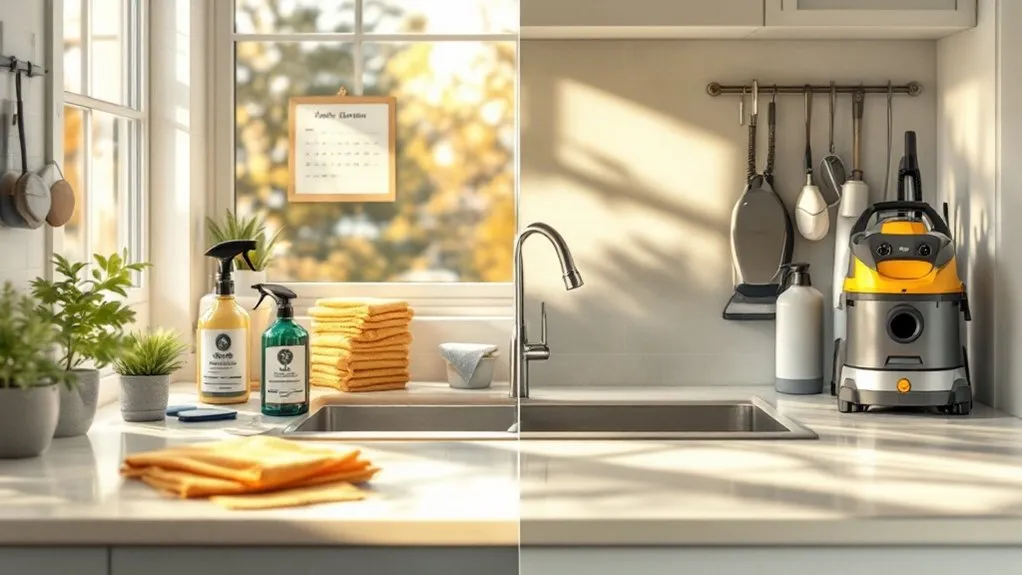
Even the most consistent cleaning routine has its limits. Some tasks simply require professional expertise, equipment, or time you don’t have.
Deep carpet cleaning, grout restoration, air duct maintenance, and post-renovation cleanup fall outside typical DIY territory. If you’re noticing persistent odors, visible mold, or surfaces that won’t respond to regular cleaning, it’s time to call in professionals.
You don’t need to abandon your recurring plan—just supplement it. Schedule professional services quarterly or annually alongside your routine.
Think of it as reinforcing your system, not replacing it. Smart cleaning plans know when to ask for help.
Frequently Asked Questions
Can Recurring Cleaning Plans Help Reduce Household Allergens and Improve Air Quality?
Yes, recurring cleaning plans can greatly reduce household allergens and improve your air quality.
When you consistently vacuum carpets, dust surfaces, and change air filters on a scheduled basis, you’ll prevent allergen buildup from dust mites, pet dander, and mold.
You’ll breathe cleaner air by maintaining weekly or bi-weekly cleanings.
Don’t forget to wash bedding regularly and clean HVAC vents, as they’re common allergen hotspots in your home.
Are There Eco-Friendly Cleaning Products Recommended for Recurring Cleaning Schedules?
Yes, you can incorporate plenty of eco-friendly products into your recurring cleaning schedule.
Look for plant-based cleaners like Branch Basics, Seventh Generation, or Mrs. Meyer’s for everyday surfaces. You can also use white vinegar and baking soda for natural scrubbing and deodorizing.
Don’t forget microfiber cloths, which reduce your need for disposable wipes. These choices keep your home clean while minimizing harmful chemical exposure for your family.
How Do Recurring Cleaning Plans Differ for Renters Versus Homeowners?
As a renter, you’ll focus mainly on maintaining the property to protect your deposit, so you’ll prioritize surface cleaning, appliance upkeep, and preventing damage.
As a homeowner, you’re responsible for everything, including deep maintenance like cleaning gutters, HVAC filters, and grout.
Renters typically follow shorter-term schedules, while homeowners plan seasonally.
You’ll also want to check your lease agreement, as it may specify certain cleaning requirements you’re obligated to meet.
Can Children Be Assigned Age-Appropriate Tasks Within a Recurring Cleaning Plan?
Yes, you can absolutely assign age-appropriate cleaning tasks to children within your recurring plan!
Toddlers can pick up toys and wipe surfaces, while school-age kids can vacuum, dust, and sort laundry.
Teenagers can tackle bathrooms, mop floors, and take out trash.
You’ll build responsibility while lightening your workload.
Make it fun with checklists or reward systems, and you’ll build lifelong cleaning habits in your children.
Do Recurring Cleaning Plans Vary by Climate or Geographic Location?
Yes, your recurring cleaning plan absolutely should reflect your local climate and geography.
If you live in a humid region, you’ll need to tackle mold and mildew more frequently.
Desert dwellers must constantly address dust buildup.
Coastal homeowners deal with salt residue on windows and surfaces.
In snowy climates, you’ll focus on mud and moisture tracked indoors.
Tailor your schedule to fight the specific challenges your environment throws at you.
Conclusion
Finding the best recurring cleaning plan comes down to what actually works for your schedule and lifestyle. You’ve now got the tools to build daily habits, tackle weekly tasks, and never miss those sneaky monthly deep cleans. Stick with your system, adjust it when life gets busy, and don’t hesitate to call in professionals when you need backup. Your home doesn’t have to be perfect—it just has to work for you.