

Post-renovation cleaning isn’t just a deeper version of your regular clean — it’s an entirely different process. Professionals remove bulk debris first, then work systematically from top to bottom, tackling ceilings, vents, walls, and windows before touching the floors. They use HEPA vacuums, microfiber cloths, and specialized solvents to handle construction dust, adhesive residue, and paint splatter that standard products can’t touch. This process involves more than most people expect, and it’s worth knowing exactly what’s involved.
Key Takeaways
Professionals remove bulk debris first, then systematically clean from ceilings down to floors, preventing dust from re-contaminating already-cleaned surfaces.
HEPA vacuums and air scrubbers capture ultrafine construction dust, stopping harmful particles like silica and VOCs from recirculating indoors.
Microfiber cloths dry-wipe surfaces before vacuuming, effectively trapping construction dust without spreading it across walls and fixtures.
Specialists use specific solvents for different residues—like adhesive or paint splatter—to prevent damage from the wrong cleaning products.
Vents, light fixtures, window tracks, cabinet interiors, and grout lines receive targeted cleaning that standard methods consistently overlook.
Why Post-Renovation Cleaning Is Nothing Like a Regular Deep Clean
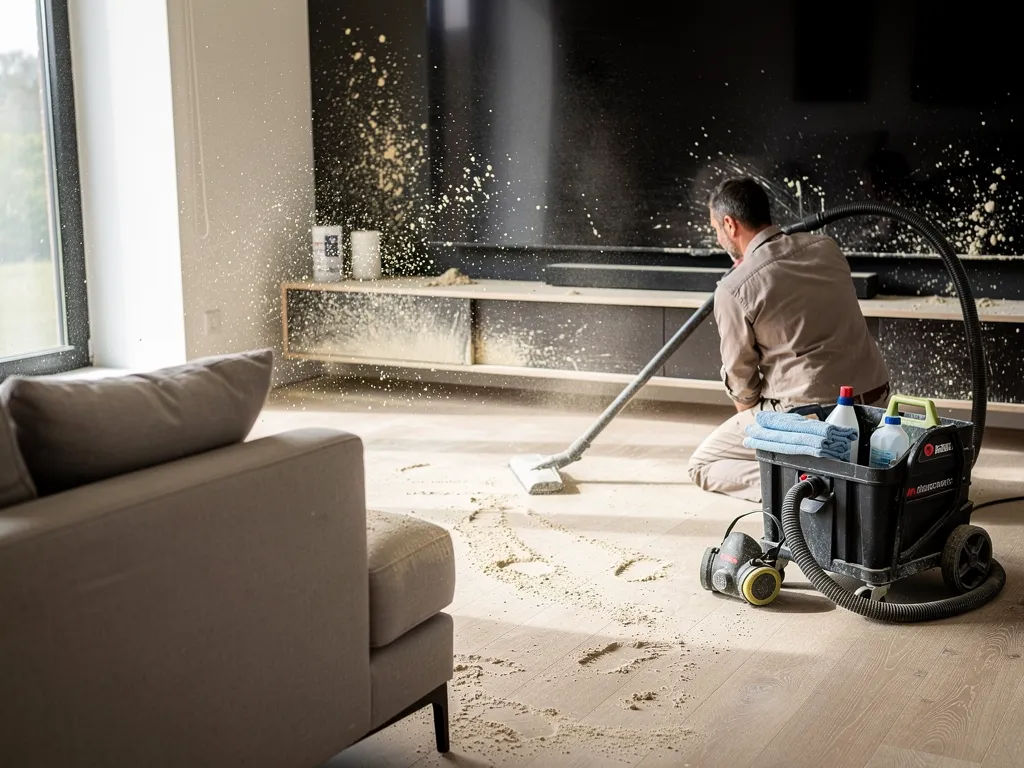
After a renovation, your home might look finished—but the mess left behind is anything but ordinary.
Construction dust doesn’t behave like everyday dirt. It’s ultrafine, travels through air vents, coats surfaces you never touched, and embeds itself into fabrics and flooring. Regular cleaning products and vacuum filters aren’t built to handle it.
You’re also dealing with debris like drywall particles, adhesive residue, paint splatter, and chemical fumes. A standard deep clean addresses visible grime—post-renovation cleaning requires systematic, specialized work from ceiling to subfloor.
If you treat it like a routine clean, you’ll miss hazards that affect your air quality for months.
What’s Actually Included in a Professional Post-Renovation Clean
Knowing what sets post-renovation cleaning apart makes it easier to understand why professional services cover far more ground than most people expect.
Crews start by removing bulk debris and construction waste, then tackle fine dust settled in vents, light fixtures, cabinetry, and surfaces.
They clean inside cabinets and drawers, wipe down all woodwork and trim, and scrub grout lines where dust has packed in.
They clean windows inside and out, including tracks and frames.
Floors receive multiple treatments based on material type.
You’re getting a systematic, top-to-bottom process designed specifically to address what renovation work leaves behind.
The Top-to-Bottom Order Pros Always Follow
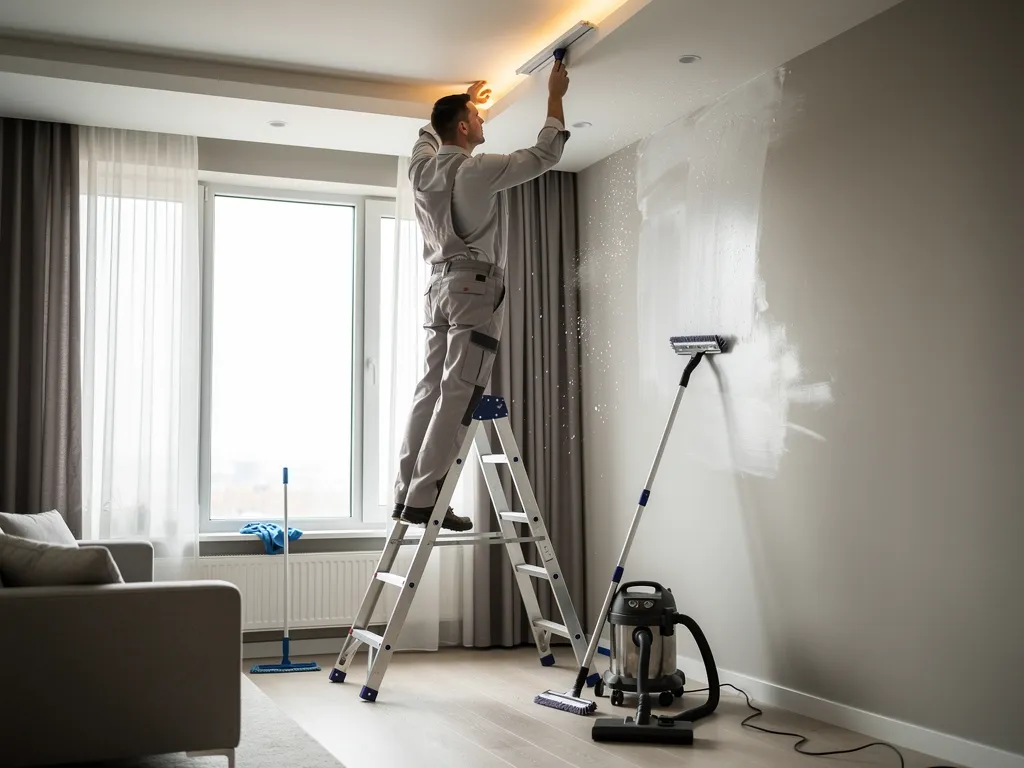
Professional crews always clean from top to bottom, and there’s a straightforward reason for it: dust and debris fall.
Starting at the ceiling and working downward means you’re never re-contaminating surfaces you’ve already cleaned.
Pros typically follow this sequence:
Ceilings and light fixtures first — dislodged particles drop onto floors, not clean countertops
Walls and windows next — streaks and dust settle downward before floor work begins
Floors last — every pass captures whatever fell during earlier stages
If you reverse this order, you’ll double your workload.
The sequence isn’t preference — it’s efficiency built into every professional job.
How Pros Handle Construction Dust in a Post-Renovation Clean
Construction dust is a different beast than everyday household dust — it’s fine, heavy, and pervasive, settling into every crack and surface long before you notice it.
Pros never vacuum it first. Instead, they dry-wipe all hard surfaces using microfiber cloths, capturing particles rather than scattering them. They work in one direction — high to low, far to near — so displaced dust falls onto uncleaned areas.
Once surfaces are wiped down, they vacuum using a HEPA-filter machine. Finally, they damp-mop floors to catch anything remaining.
Skipping this sequence means you’re just moving dust around, not actually removing it.
Chemical Residues and Surface Contaminants Pros Always Address
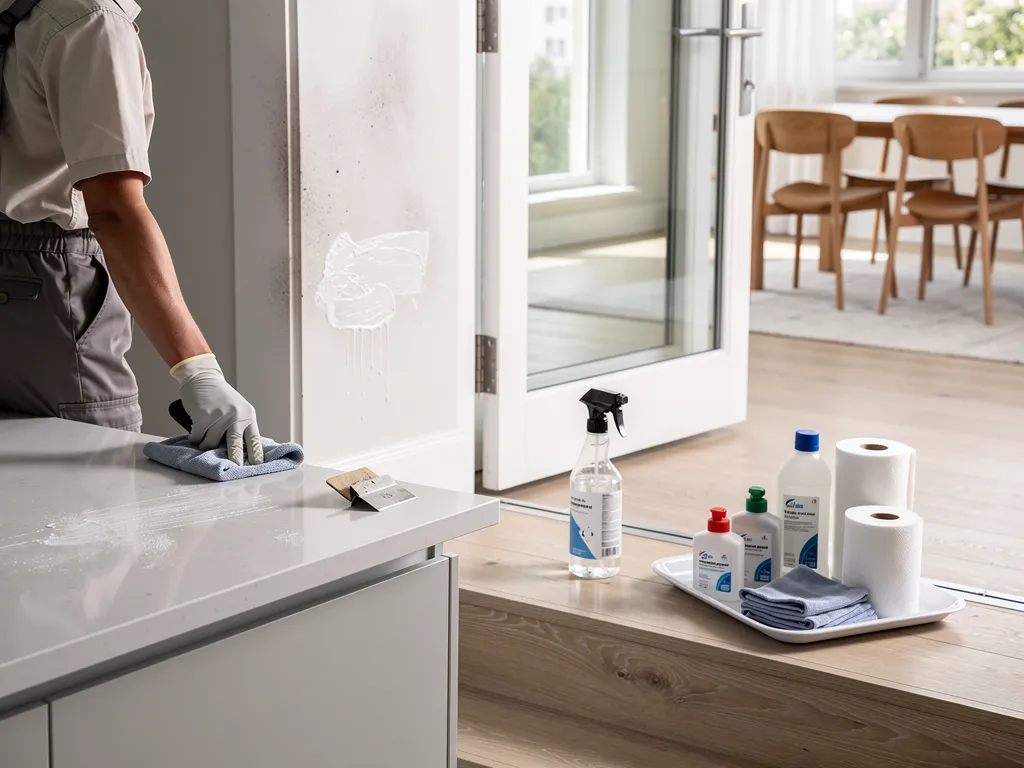
Renovation work leaves behind more than dust — adhesive residues, paint overspray, silicone smears, and solvent films cling to surfaces and won’t respond to standard cleaning products.
Pros identify each contaminant type before selecting the appropriate solvent or remover.
Adhesive residue: professionals apply isopropyl alcohol or commercial adhesive removers
Paint overspray: razor scrapers and mineral spirits tackle hardened splatter without scratching
Silicone smears: silicone-specific removers break down the polymer before wiping clean
You can’t guess your way through chemical residues — using the wrong product damages finishes, wastes time, and leaves contaminants behind.
Professional Tools You Won’t Find in a Home Cleaning Kit
Knowing which chemical removes what is only half the battle — you also need the right equipment to apply it effectively. Professionals carry tools that make a real difference in results.
These tools aren’t just expensive — they’re specialized. Without them, you spread contaminants instead of removing them. That’s the gap between a professional finish and a surface-level clean.
What Post-Renovation Work Does to Your Indoor Air Quality
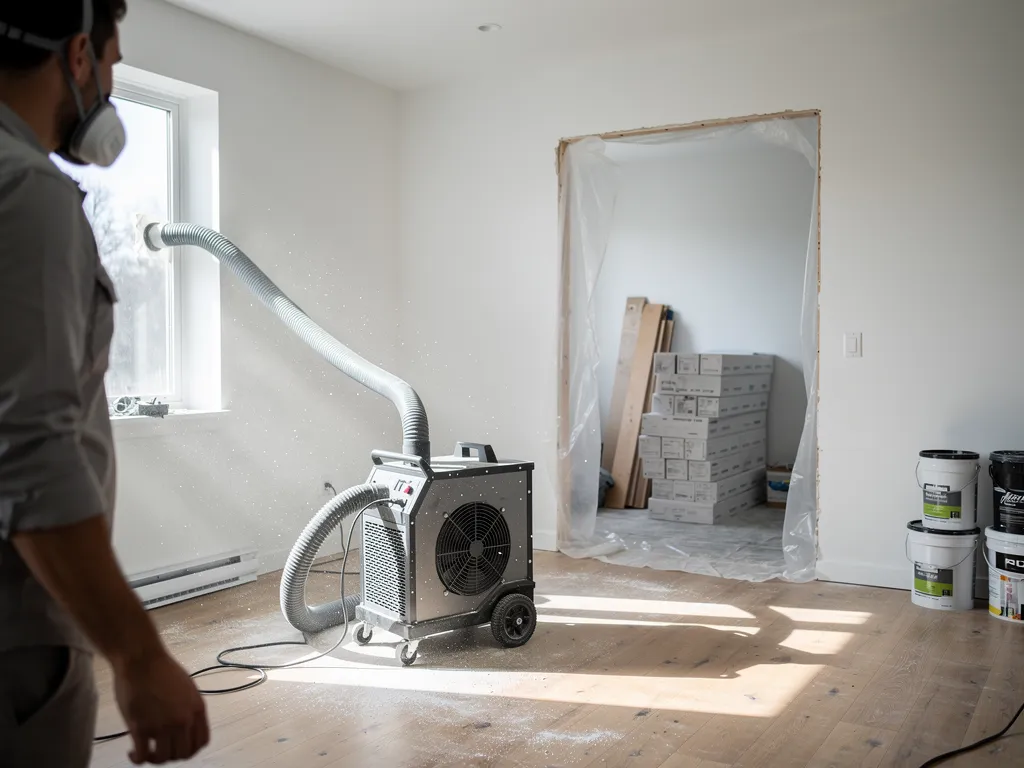
Even after the last contractor leaves, your indoor air quality can remain compromised for days or weeks. Renovation work releases a cocktail of invisible hazards that standard ventilation can’t fully clear.
You’re likely dealing with:
Silica dust from cut drywall and concrete, which penetrates deep into lung tissue
VOCs off-gassing from fresh paint, adhesives, and sealants
Mold spores disturbed during wall or flooring removal
Professionals use HEPA air scrubbers and negative-pressure systems to actively pull contaminated air out rather than simply circulate it.
That distinction protects your household long after the renovation’s finished.
Kitchens, Bathrooms, and Floors: Where Renovation Debris Concentrates Most
While airborne contaminants spread throughout the whole home, the heaviest physical debris settles in predictable spots.
Kitchens collect drywall dust inside cabinets, on appliance surfaces, and within range hood filters.
Bathrooms trap grit in grout lines, around fixture bases, and inside ventilation fans.
Floors bear the worst of it — construction dust compresses into wood grain, embeds in carpet fibers, and fills tile joints.
You’ll also find debris accumulating in corners, under baseboards, and inside any drawer or cabinet left slightly open.
Professionals target these zones first because ignoring them lets contamination migrate back into cleaned areas.
What Post-Renovation Tasks Are Safe to Handle Yourself
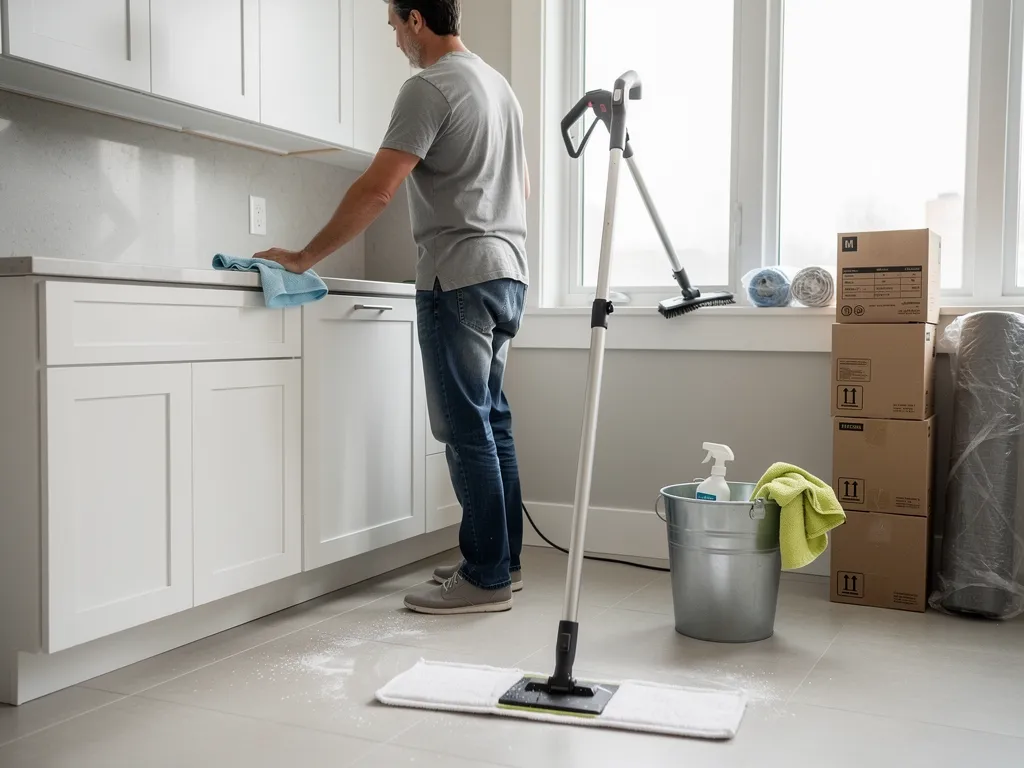
Not every post-renovation cleaning task requires professional help, and handling some of it yourself can save real money.
Once the heavy debris is cleared, you can confidently tackle several surface-level jobs:
Wiping down cabinets, countertops, and baseboards with a damp microfiber cloth
Vacuuming window sills, ledges, and light fixtures using a brush attachment
Mopping hard floors after the bulk of dust has already settled
These tasks don’t require specialized equipment or training.
Focus your budget on professional services where hazardous materials, air quality, or precision matter most.
How to Choose the Right Post-Renovation Cleaning Service
Choosing the right post-renovation cleaning service takes more than a quick Google search—vet each company carefully before handing over access to your freshly renovated space.
Ask specifically about post-construction experience, since standard house cleaning and renovation cleanup require completely different techniques and equipment.
Request proof of insurance, because construction debris creates liability risks.
Check reviews that mention renovation projects, not just routine cleaning jobs.
Get itemized quotes so you know exactly what’s included.
Finally, confirm they use HEPA-filter vacuums and commercial-grade equipment—companies that can’t answer basic questions about their tools probably aren’t the right fit.
Frequently Asked Questions
How Long Does a Professional Post-Renovation Clean Typically Take?
Expect a professional post-renovation clean to take anywhere from 4 to 8 hours for an average-sized home, though larger spaces can stretch to 2 full days.
Your timeline depends on the renovation’s scope, the property’s square footage, and how much dust and debris remain.
Professionals typically work in phases—dust removal, deep surface cleaning, and final detailing—so you’re getting a thorough, systematic process rather than a rushed one-time sweep.
Does Homeowners Insurance Ever Cover Post-Renovation Professional Cleaning Costs?
Homeowners insurance rarely covers post-renovation cleaning costs because it’s considered routine maintenance rather than damage from an unexpected event.
However, you might find coverage if your renovation was tied to an insurance claim, like fire or water damage restoration. Always check your specific policy and call your insurer directly.
Some contractors also carry liability coverage that could help if their work caused unexpected cleanup complications.
Should Pets and Children Leave the Home During Post-Renovation Cleaning?
Yes, you should absolutely relocate pets and children during post-renovation cleaning.
You’re dealing with harsh chemical cleaners, airborne dust particles, and potentially disturbed construction debris like silica or lead.
Keep them away until professionals finish and the space has fully ventilated.
You’ll typically want to wait at least 2-4 hours after cleaning finishes before allowing vulnerable family members back inside.
Don’t risk their respiratory health unnecessarily.
How Soon After Renovation Work Ends Can Cleaning Safely Begin?
Wait at least 24-48 hours after renovation work ends before starting deep cleaning. This gives dust particles time to settle rather than remain airborne.
If your project involved painting, adhesives, or chemical sealants, you’ll need to wait longer—typically 72 hours—to guarantee proper ventilation has cleared harmful fumes.
Always confirm with your contractors that all work is completely finished before you start any cleaning process.
Can Post-Renovation Cleaning Damage Newly Installed Surfaces or Fresh Paint?
Yes, post-renovation cleaning can absolutely damage newly installed surfaces and fresh paint if you’re not careful.
Avoid abrasive scrubbers on fresh paint, as they’ll scratch and dull the finish.
Don’t use harsh chemical cleaners on new grout or stone surfaces either.
Stick to pH-neutral cleaners, soft microfiber cloths, and gentle pressure.
Always test any cleaning product on a hidden area before tackling the full surface.
Conclusion
You’ve just survived a renovation—don’t let lingering dust and chemical residue undo all that hard work. A professional post-renovation clean isn’t a luxury; it’s the final step that makes your space actually livable. Whether you’re tackling some tasks yourself or hiring the full job out, you now know what’s involved and what to expect. Your renovated space deserves a finish that matches the effort you’ve already put in.