

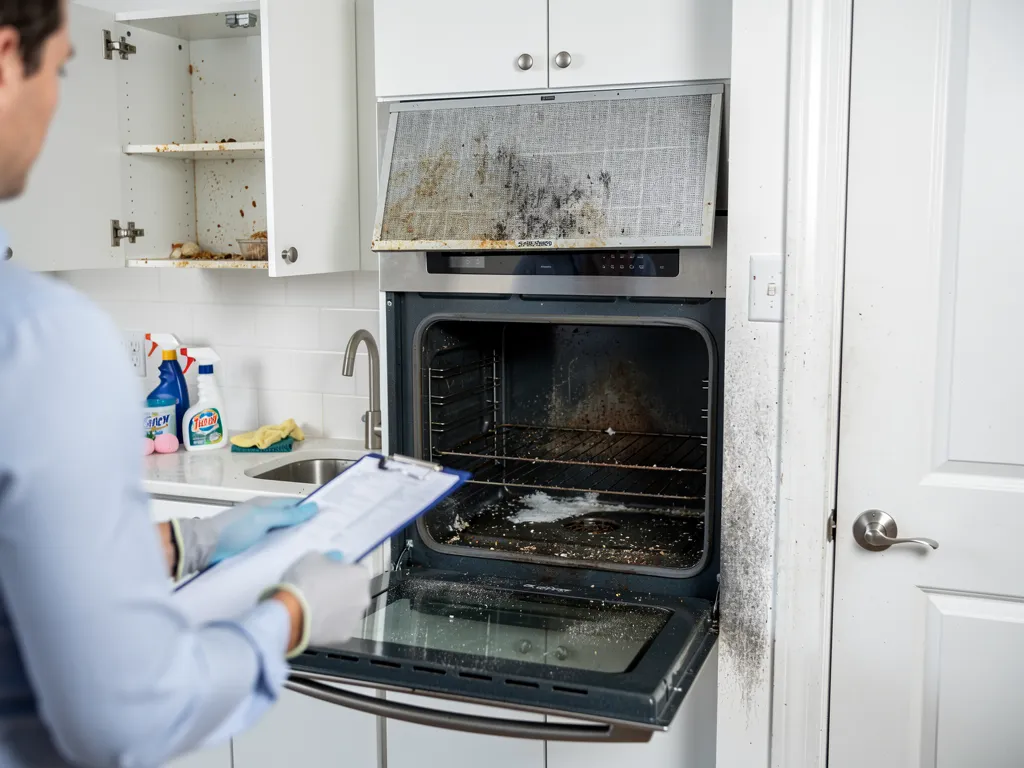
You lose your deposit when your definition of “clean” doesn’t match your landlord’s. Landlords compare the unit to its move-in condition using detailed checklists, and a single missed area—like a greasy range hood or grimy oven interior—can trigger costly professional cleaning charges. DIY cleaning rarely meets inspection standards, and those deductions can easily reach hundreds of dollars. Keep reading to learn what’s at stake and how to protect every penny of your deposit.
Key Takeaways
Landlords compare unit condition to move-in state, and even minor overlooked areas can trigger costly professional cleaning deductions.
Commonly missed spots like range hood filters, cabinet interiors, and door frames often fail rigorous landlord inspections.
Store-bought products and casual cleaning rarely eliminate months of grease and soap scum buildup to inspection standards.
Cleaning deductions can total hundreds of dollars, with single tasks like oven cleaning charged at $150 or more.
Hiring professional cleaners upfront costs less than losing your deposit to landlord-arranged cleaning services.
What Landlords Actually Mean by “Move-Out Clean”
When your landlord says they expect the unit left “move-out clean,” they don’t mean the same thing you do.
To you, clean means wiping surfaces and sweeping floors. To them, it means scrubbing every appliance inside and out, clearing grout lines of buildup, dusting baseboards, cleaning vents, and spot-treating walls.
They’re comparing your unit’s condition against its move-in state, often using a detailed checklist.
Miss a single line item—like a grimy oven or soap-scum-covered shower door—and they’ll hire someone to fix it, then deduct that cost directly from your deposit.
The Rooms and Surfaces Renters Consistently Overlook
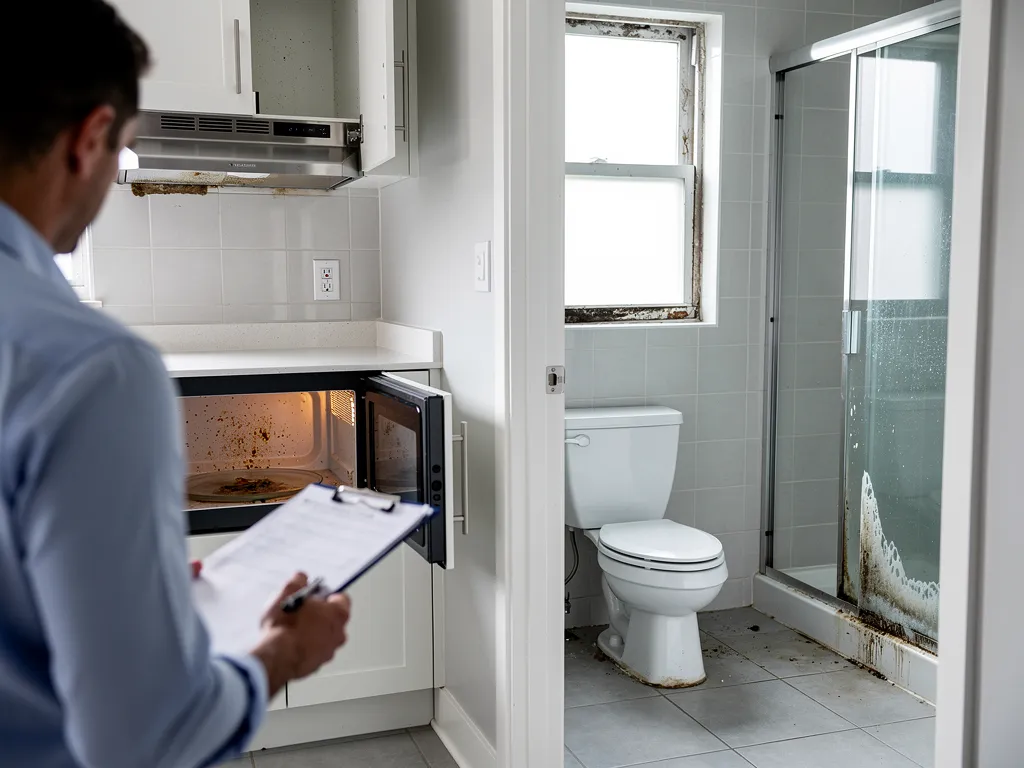
Even seasoned renters tend to miss the same spots: the tops of door frames, the inside of the microwave, cabinet interiors, window tracks, and the area behind the toilet.
Landlords know exactly where to look because they’ve seen these areas neglected before. You might scrub the bathroom tiles spotless, but if grime builds up behind the toilet or soap scum builds up on the shower track, they’ll notice.
Kitchens are especially unforgiving—grease collects on range hood filters and cabinet tops.
Walk through your unit like an inspector, not a tenant, and you’ll catch what you’d otherwise leave behind.
Why DIY Cleaning Rarely Meets Landlord Standards
Knowing where to look is only half the battle—cleaning those spots to a landlord’s standard is another challenge entirely.
You might scrub a surface until it looks spotless, but landlords and professional inspectors assess cleanliness differently than you do. They’re checking for grease buildup behind appliances, soap scum in grout lines, and limescale inside fixtures—things casual cleaning misses.
DIY efforts also lack the commercial-grade equipment and solutions professionals use. You’re working with store-bought products against months of accumulated grime.
That gap between “looks clean” and “passes inspection” is exactly where deposit deductions happen.
How Landlords Use Cleaning Failures to Withhold Your Deposit
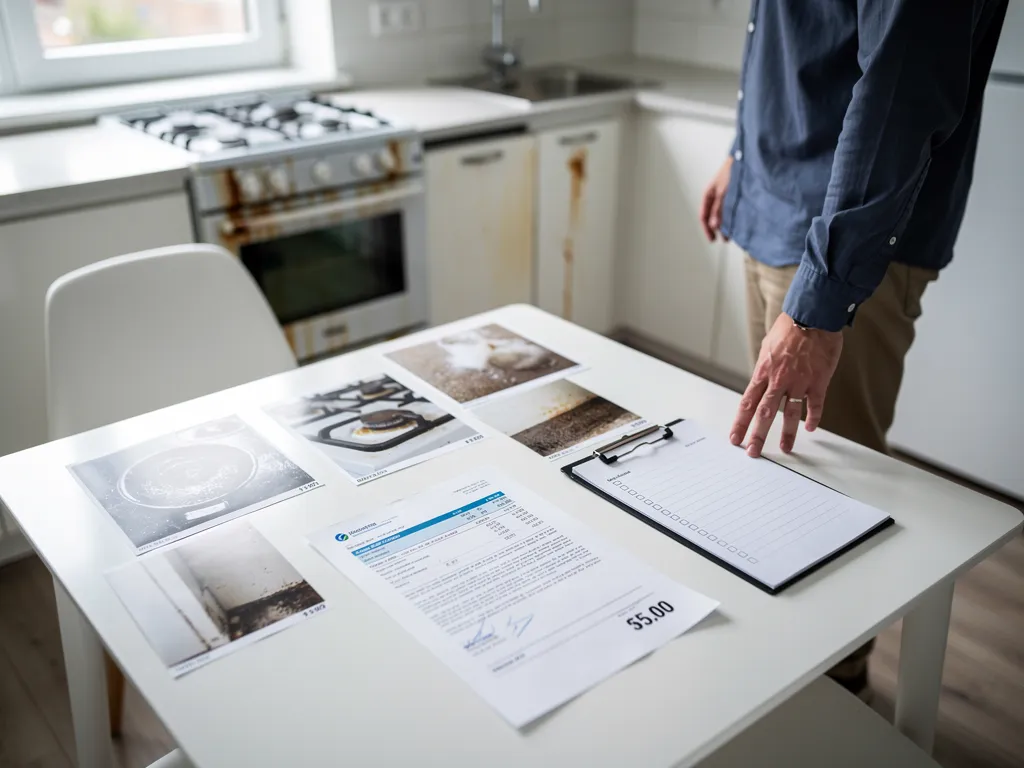
Landlords don’t need to prove bad faith—they just need documentation. If your move-out cleaning doesn’t match their move-in checklist, they’ve got legal grounds to keep your deposit.
Here’s how they typically do it:
Photographic evidence — timestamped photos highlighting grease, grime, or residue you missed
Professional cleaning invoices — deducting the full cost of hiring cleaners from your deposit
Itemized deduction letters — legally formatted documents that shift the burden of proof onto you
Disputing these claims is difficult without your own counter-documentation, which most renters never think to gather.
What Cleaning Deductions Actually Cost You in Real Terms
Cleaning deductions can strip hundreds of dollars from your deposit in a single line item. A landlord might charge $150 for oven cleaning, $200 for carpet shampooing, and $100 for bathroom deep cleaning—all in one invoice.
That’s $450 gone before you even address other issues. Professional cleaning services typically cost $150–$300 for an entire unit, meaning you’re paying two to three times more through deductions than you’d spend hiring cleaners yourself.
You’re also losing that money permanently, while hiring professionals upfront preserves your full deposit. The math makes professional cleaning before move-out the obvious financial decision.
What Professional End-of-Tenancy Cleaning Covers
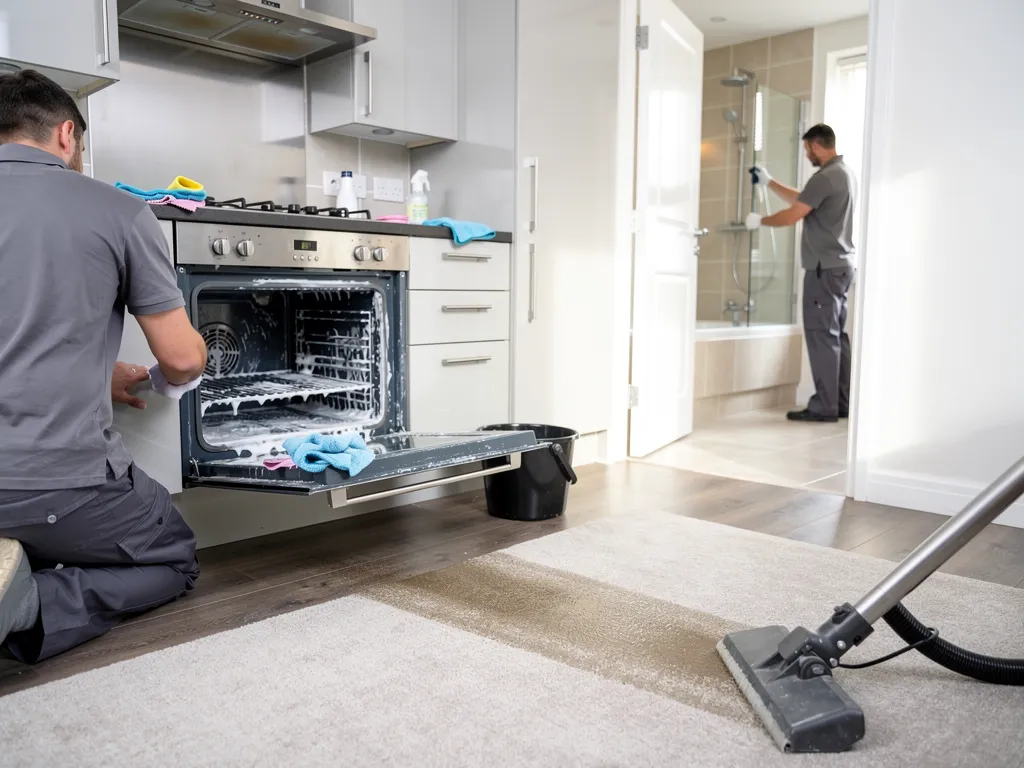
Professional end-of-tenancy cleaning goes well beyond a standard tidy-up, which is exactly why it justifies the cost over landlord deductions.
You’re paying for specialists who address what routine cleaning misses entirely.
Here’s what’s typically covered:
Deep kitchen cleaning — degreasing ovens, extractor fans, and appliances to manufacturer standards
Bathroom descaling — removing limescale from tiles, fixtures, and grout that discolors over time
Carpet and upholstery treatment — steam cleaning embedded dirt landlords flag immediately
These aren’t cosmetic touches.
They’re the exact problem areas that trigger deposit disputes, making professional cleaning a precise financial defense, not an optional luxury.
How to Choose a Trustworthy End-of-Tenancy Cleaning Service
Not every cleaning company delivers what it promises, so verify a few things before handing over your money.
Check for reviews on independent platforms, not just testimonials on their website. Confirm they offer a re-clean guarantee if your landlord raises issues.
Ask whether they use a tenancy-specific checklist aligned with inventory standards. Verify they carry liability insurance in case of accidental damage.
Avoid companies that provide vague quotes without seeing your property’s size and condition. A trustworthy service will communicate clearly, itemize their work, and stand behind their results with documented proof of completion.
The End-of-Tenancy Cleaning Checklist Before You Hand Back Keys
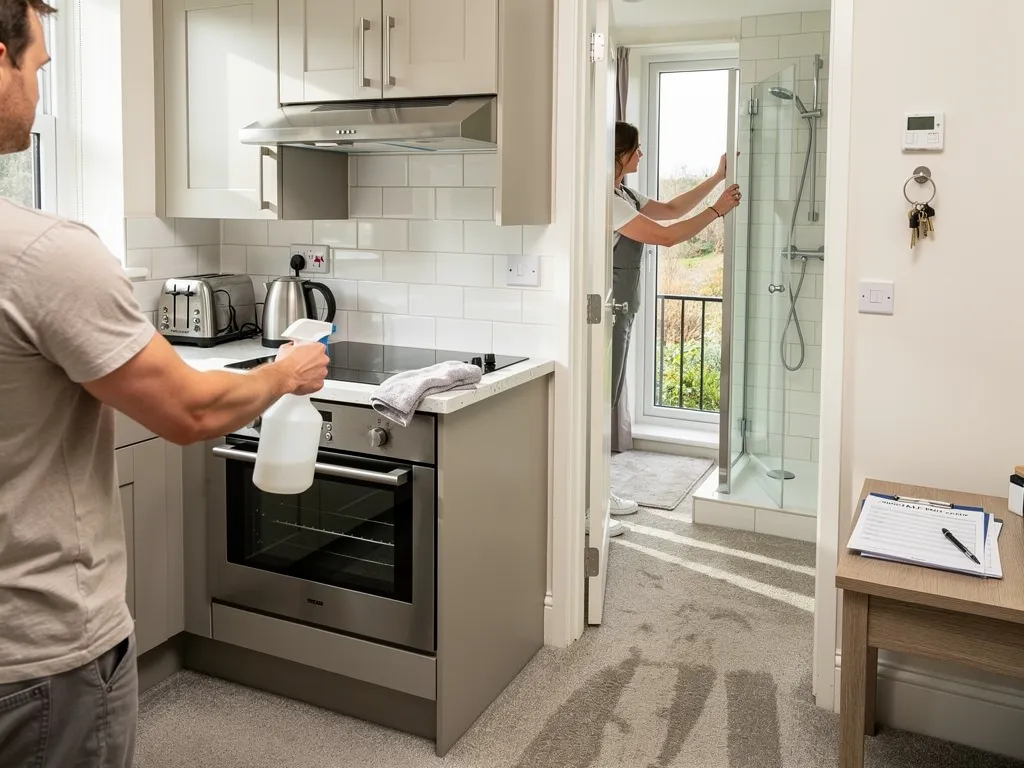
Before you hand back your keys, systematically clean these 8 core areas to protect your deposit.
Kitchen – Degrease oven interiors, wipe cabinet faces, and descale appliances.
Bathrooms – Remove limescale, scrub grout lines, and thoroughly sanitize fixtures.
Living areas – Vacuum carpets deeply, clean skirting boards, and wipe light switches.
Don’t overlook windows, walls, and outdoor spaces either.
Landlords inspect everything against your original inventory report, so matching that condition precisely is critical. Missing even one area gives them legitimate grounds to deduct from your deposit.
Frequently Asked Questions
Can My Landlord Charge for Cleaning if the Property Was Already Dirty?
Generally, your landlord can’t charge you for pre-existing dirt or damage.
Document the property’s condition thoroughly when you move in by taking dated photos and videos. If your landlord tries charging you for cleaning that was already necessary before your tenancy, you can dispute it using your move-in documentation.
Always get a signed move-in checklist to protect yourself, as it’s your strongest evidence against unfair deposit deductions.
Does Renters Insurance Ever Cover Cleaning-Related Deposit Disputes?
Renters insurance typically won’t cover cleaning-related deposit disputes. Your policy protects against theft, fire, and liability—not disagreements with your landlord over cleaning charges.
However, if you’re facing an unfair deduction, you can dispute it through your state’s small claims court. Document everything with photos, keep your move-in checklist, and save all written communication with your landlord.
These steps strengthen your case far more than any insurance policy would.
How Long Does a Landlord Legally Have to Return My Deposit?
Most states require your landlord to return your deposit within 14 to 30 days after you move out.
The exact deadline depends on where you live — some states allow up to 60 days. If your landlord misses the deadline, you’re often entitled to penalties, sometimes double or triple your deposit amount.
Always document your move-out condition and provide a forwarding address so there’s no excuse for delays.
Can I Dispute a Cleaning Deduction After Already Leaving the Property?
Yes, you can absolutely dispute a cleaning deduction even after leaving the property.
Start by requesting an itemized statement showing exactly what the landlord charged. Compare it against your move-in inspection report and any photos you took.
If the charges seem excessive or unjustified, send a formal written dispute letter. You can also file a complaint with your local housing authority or take the landlord to small claims court.
Do Furnished Rentals Require a Higher Standard of Cleaning Than Unfurnished Ones?
Yes, furnished rentals typically demand a higher cleaning standard than unfurnished ones.
You’re responsible for cleaning not just the space itself, but also all the furniture, upholstery, mattresses, cushions, and appliances provided.
Landlords will inspect these items closely for stains, odors, and accumulated grime.
You’ll need to deep-clean sofas, wipe down furniture surfaces, and thoroughly sanitize kitchen appliances.
Failing to meet this standard greatly increases your chances of losing your deposit.
Conclusion
You’ve worked hard throughout your tenancy, so don’t let a dirty oven or grimy bathroom cost you hundreds of pounds at the end. Landlords hold the power when it comes to deposit deductions, and they’ll use it. Professional end-of-tenancy cleaning removes that risk entirely. It’s not an expense — it’s an investment that practically pays for itself. Book early, get your deposit back, and leave on your own terms.