


You can transform your bathroom cleaning routine with these time-saving hacks: implement a 15-minute daily blitz focusing on one area each day, use Dawn dish soap mixed with vinegar for effortless grout cleaning, drop denture tablets in your toilet bowl for hands-off deep cleaning, and remove water spots with used dryer sheets. Steam-clean your shower while you’re actually showering by applying cleaning solution beforehand. These simple strategies prevent grime buildup and deliver professional results with minimal effort—and there’s even more you can discover.
Key Takeaways
- Dedicate 15 minutes daily to one bathroom area to prevent overwhelming deep cleans and stubborn buildup.
- Mix equal parts Dawn dish soap and white vinegar to effectively remove grout stains and soap scum.
- Drop two denture tablets into the toilet bowl for effortless, scrub-free cleaning that dissolves buildup.
- Remove water spots on glass and chrome by gently rubbing with used dryer sheets.
- Spray the cleaning solution before showering, and let the steam loosen grime for an easy post-shower wipe-down.
The 15-Minute Daily Bathroom Blitz Method
While deep cleaning your entire bathroom can feel overwhelming, dedicating just 15 minutes each day to targeted tasks will keep your space consistently fresh and prevent grime buildup.
Set a timer and tackle one specific area daily.
Monday: wipe down mirrors and faucets.
Tuesday: scrub the toilet inside and out.
Wednesday: clean the shower or tub.
Thursday: sweep and mop floors.
Friday: Organize countertops and restock supplies.
You’ll spend less time fighting stubborn stains since you’re addressing dirt before it accumulates.
This routine transforms bathroom maintenance from a dreaded chore into a manageable daily habit that delivers consistently clean results.
Dawn Dish Soap and Vinegar: The Ultimate Grout Cleaner
Why spend money on expensive commercial grout cleaners when two common household items can tackle even the toughest stains? Mix equal parts Dawn dish soap and white vinegar in a spray bottle for an incredibly effective grout cleaner that cuts through grime effortlessly.
| Application Method | Results Timeline |
|---|---|
| Spray directly on grout | Wait 15 minutes |
| Scrub with an old toothbrush | Stains lift immediately |
| Rinse with warm water | Grout brightens instantly |
| Repeat for stubborn areas | Deep cleaning achieved |
| Wipe dry with a microfiber cloth | Professional-level finish |
This powerful combination naturally breaks down soap scum and mildew.
Toilet Bowl Cleaning With Denture Tablets
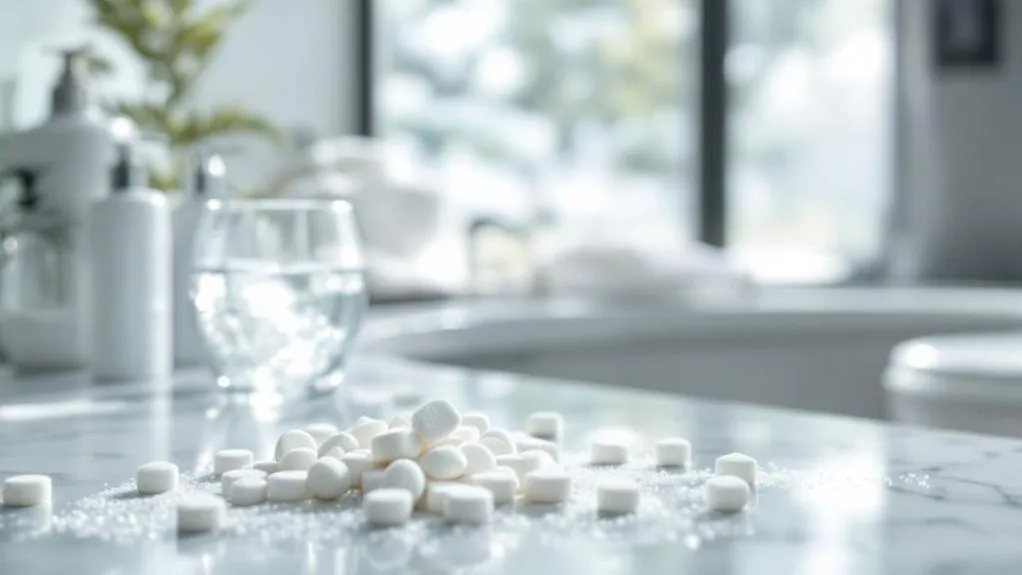
Moving from grout to another challenging bathroom cleaning task, denture tablets offer a surprisingly effective solution for toilet bowl maintenance.
You’ll find these fizzing tablets contain powerful cleaning agents that break down stains and eliminate odors without harsh scrubbing.
Simply drop two tablets into your toilet bowl and let them dissolve completely. The effervescent action loosens buildup while the cleaning compounds work on tough stains.
After fifteen minutes, brush lightly around the bowl and flush. You’ve just cleaned your toilet with minimal effort using an unexpected household item that’s gentler than commercial cleaners.
Removing Water Spots With Dryer Sheets
Those stubborn water spots on your shower doors and bathroom fixtures don’t stand a chance against ordinary dryer sheets.
Simply grab a used dryer sheet from your laundry and gently rub it across the spotted surfaces. The anti-static properties break down mineral deposits while the fabric softener residue creates a protective barrier that repels future water spots.
You’ll notice spots disappear effortlessly without scrubbing. This method works particularly well on glass shower doors, chrome faucets, and mirror surfaces.
The dryer sheet’s texture won’t scratch delicate finishes, making it safer than abrasive cleaners. It’s an inexpensive solution using items you already have.
Steam Clean Your Shower While You Shower
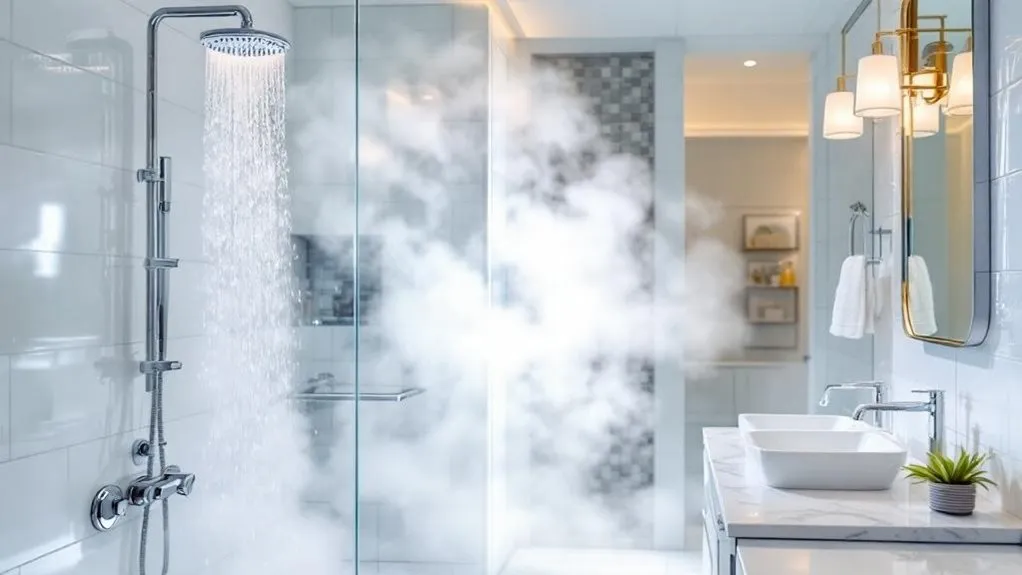
While you’re enjoying your daily shower, you can deep-clean your bathroom without any extra effort.
The steam naturally generated from hot water loosens soap scum, mildew, and grime on shower walls and doors.
Before stepping in, spray your shower surfaces with a cleaning solution or a mixture of dish soap and white vinegar.
Let the steam work its magic while you wash.
After finishing, quickly wipe down the walls with a squeegee or microfiber cloth.
This effortless technique prevents buildup and keeps your shower sparkling clean with minimal scrubbing required.
Baking Soda Paste for Stubborn Soap Scum
When soap scum proves too stubborn for regular cleaners, create a powerful baking soda paste that’ll tackle even the toughest buildup.
Mix three parts baking soda with one part water until you’ve got a thick, spreadable consistency. Apply this paste generously to affected areas, such as shower doors, tubs, and faucets.
Let it sit for fifteen minutes to break down the grime. Then scrub with a non-abrasive sponge or cloth, working in circular motions.
The baking soda’s mild abrasive properties will lift away soap scum without scratching surfaces. Rinse thoroughly with warm water for sparkling, streak-free results.
Clean Multiple Surfaces With Baby Wipes
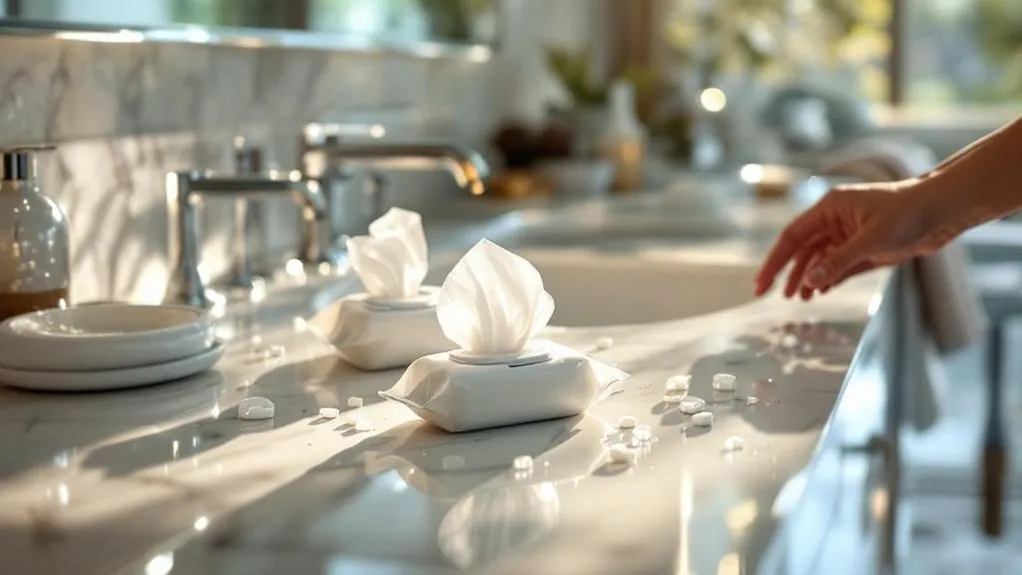
Baby wipes aren’t just for diaper changes – they’re surprisingly effective bathroom cleaners that can tackle multiple surfaces in one go.
You’ll find them perfect for quick touch-ups on faucets, countertops, toilet seats, and light switches. They’re gentle enough for delicate surfaces yet strong enough to remove fingerprints, dust, and minor stains.
Keep a pack handy for daily maintenance cleaning – they’re especially useful for guest bathrooms before visitors arrive. Unlike harsh chemicals, baby wipes won’t damage surfaces or leave streaks.
They’re also great for cleaning around toilet bases and getting into tight spaces around fixtures.
Squeegee Trick for Hair Removal From Drains
Although most people reach for chemical drain cleaners when hair clogs their drains, a simple window squeegee can solve this messy problem more effectively and safely.
You’ll pull out stubborn hair clumps that chemicals can’t dissolve. Start by removing the drain cover if possible. Insert the squeegee’s rubber blade into the drain opening and gently pull upward in a scraping motion.
The rubber edge grabs hair strands and lifts them out completely. Repeat this process around the drain’s perimeter until you’ve removed all visible hair.
This method works instantly without waiting for chemicals or risking pipe damage.
Lemon and Salt for Faucet Shine
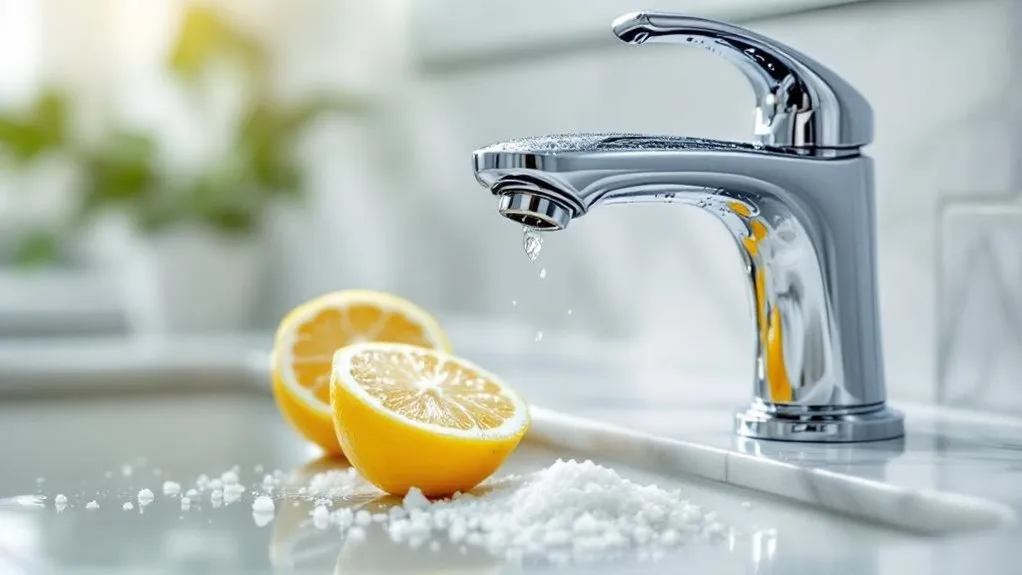
Two common kitchen ingredients can transform your dull, water-spotted faucets into gleaming fixtures without harsh chemicals. Cut a lemon in half and dip it in coarse salt. Rub the lemon directly onto your faucet’s surface, letting the citric acid dissolve mineral deposits while salt acts as a gentle abrasive. The natural oils will leave a brilliant shine.
| Before Treatment | After Treatment |
|---|---|
| Cloudy water spots | Crystal clear shine |
| Dull metal finish | Mirror-like gleam |
| Stubborn mineral buildup | Smooth, clean surface |
| Chemical residue smell | Fresh citrus scent |
| Expensive cleaning products | Pennies per cleaning |
Rinse thoroughly and buff dry for spectacular results.
Overnight Deep Clean With Toilet Paper and Cleaner
While lemon and salt work wonders on faucets, your toilet bowl requires a different approach for maximum effectiveness.
This overnight method transforms stubborn stains without scrubbing. Apply your preferred toilet bowl cleaner generously under the rim and around the bowl.
Next, layer toilet paper strips over the cleaner, pressing them against stained areas. The paper holds the cleaner in place, allowing extended contact time with grime and mineral deposits.
Leave this setup overnight, then remove the paper and flush in the morning. You’ll find stains dissolved and your toilet sparkling clean with minimal effort required.
Frequently Asked Questions
How Often Should I Replace My Bathroom Cleaning Supplies and Tools?
You should replace toilet brushes every 6 months, sponges every 2-3 weeks, and microfiber cloths monthly or when they start smelling.
Disinfectants and cleaners typically last 1-2 years if stored properly, but check expiration dates.
Replace scrub brushes when bristles wear down or become frayed.
Don’t wait until tools look obviously dirty – replacing them regularly guarantees you’re actually cleaning effectively rather than just spreading germs around your bathroom.
What’s the Best Way to Prevent Mold and Mildew Growth?
You’ll prevent mold and mildew by keeping your bathroom dry and well-ventilated.
Run your exhaust fan during showers and for 30 minutes afterward. Wipe down wet surfaces immediately, especially shower walls and tub edges.
Fix leaky faucets and pipes promptly since moisture feeds mold growth. Clean regularly with mold-preventing products, and don’t let damp towels sit around.
Open windows when possible to improve air circulation and reduce humidity levels naturally.
Are These Cleaning Hacks Safe for Septic Systems?
Most natural bathroom cleaning hacks are septic-safe, but you’ll need to avoid harsh chemicals like bleach, antibacterial soaps, and ammonia-based cleaners.
Stick to vinegar, baking soda, and mild dish soap instead. Don’t flush disinfecting wipes or paper towels down your toilet.
If you’re using commercial cleaners, check labels for “septic-safe” or “biodegradable” markings.
When in doubt, test small amounts first and space out your cleaning sessions to avoid overwhelming your system’s beneficial bacteria.
How Do I Clean Bathroom Exhaust Fans Effectively?
Turn off the power first, then remove the fan cover by unclipping or unscrewing it.
Vacuum loose dust and debris from the cover and fan blades.
Wash the cover in warm, soapy water and let it dry completely.
Use a damp cloth to wipe down the fan motor housing and blades.
For stubborn buildup, use an old toothbrush with a mild cleaner.
Reinstall the cover once everything’s dry and restore power.
What’s the Proper Way to Disinfect Bathroom Surfaces After Illness?
Start by wearing gloves and ventilating the area.
Use a bleach solution (1 part bleach to 9 parts water) or EPA-approved disinfectant.
Spray all surfaces, including faucets, toilet handles, light switches, and doorknobs.
Let the disinfectant sit for the manufacturer’s recommended contact time—usually 30 seconds to several minutes.
Wipe clean with disposable paper towels, working from cleanest to dirtiest areas.
Dispose of the gloves and wash your hands thoroughly afterward.