

Start with essential supplies like microfiber cloths, all-purpose cleaners, and a quality vacuum to tackle every surface effectively. Establish daily habits, including making beds each morning, cleaning dishes immediately after meals, and taking a 10-minute walk to pick up before bed. Deep-clean room by room using top-to-bottom techniques, focusing on kitchen grease buildup and bathroom soap scum. Combat stubborn stains with natural solutions like baking soda paste and white vinegar mixtures. Discover thorough strategies that’ll maintain your pristine home year-round.
Key Takeaways
- Establish daily 5-10-minute cleaning habits, like making beds, wiping counters, and doing dishes immediately after meals.
- Clean systematically from top to bottom in each room, allowing cleaning solutions time to work before wiping surfaces.
- Use natural cleaning solutions like white vinegar, baking soda, and lemon juice for chemical-free, effective household cleaning.
- Focus on room-specific deep cleaning: degrease kitchen appliances, target bathroom mildew, and vacuum under bedroom furniture.
- Maintain organization by assigning designated homes to all items, regularly decluttering, and using effective storage solutions throughout your home.
Essential Cleaning Supplies and Tools for Every Room
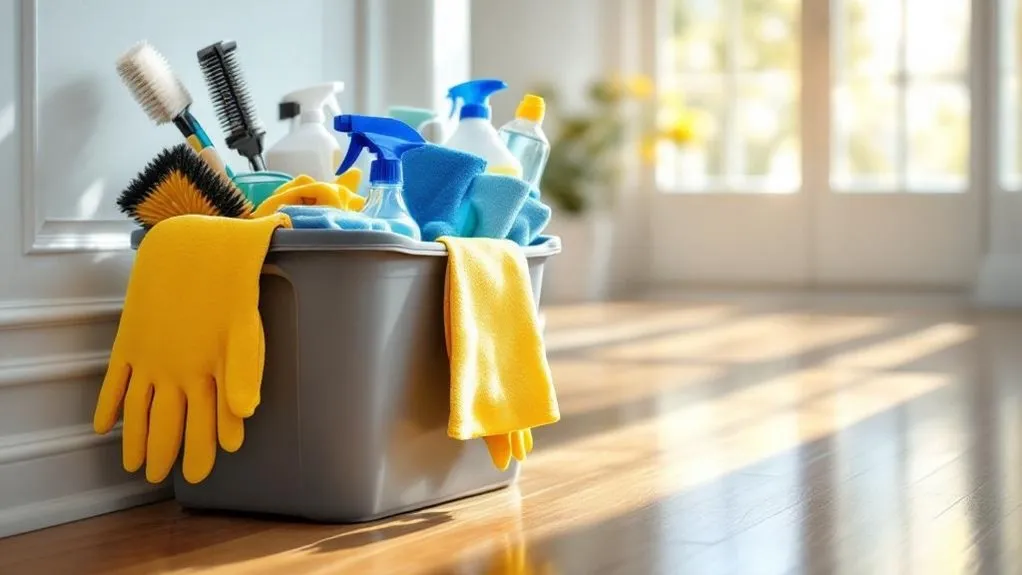
Before you plunge into your cleaning routine, you’ll need the right arsenal of supplies and tools to tackle dirt, grime, and clutter effectively.
Start with microfiber cloths for dusting and wiping surfaces without scratching. You’ll want all-purpose cleaner for most areas, plus specialized products like glass cleaner and disinfectant.
Don’t forget a reliable vacuum with attachments, a sturdy mop, and rubber gloves for protection. Keep a caddy or bucket to transport supplies efficiently between rooms.
Essential tools include scrub brushes, sponges, and paper towels. Having quality equipment saves time and guarantees thorough cleaning throughout your home.
Room-by-Room Deep Cleaning Strategies
When you’re ready to tackle deep cleaning, each room requires a tailored approach that addresses its unique challenges and high-traffic areas.
In kitchens, focus on degreasing appliances, scrubbing backsplashes, and cleaning inside cabinets.
For bathrooms, target soap scum, mildew, and hard water stains on fixtures and tiles.
Bedrooms need a thorough dusting of furniture, washing bedding, and vacuuming under beds.
Living areas require deep carpet cleaning, wiping baseboards, and cleaning light fixtures.
Don’t forget often-missed spots like ceiling fans, door frames, and switch plates.
Work systematically from top to bottom, allowing cleaning solutions time to work before wiping.
Daily Cleaning Habits That Make a Difference

While deep cleaning tackles the big jobs, establishing simple daily habits prevents mess from accumulating and reduces your overall cleaning workload. These small actions take minutes but create sa ignificant impact over time.
| Time of Day | Task | Duration |
|---|---|---|
| Morning | Make beds, wipe counters | 5 minutes |
| After meals | Clean dishes immediately | 10 minutes |
| Evening | 10-minute pickup walk | 10 minutes |
| Before bed | Lay out tomorrow’s clothes | 3 minutes |
You’ll notice cleaner surfaces, less clutter, and reduced weekend cleaning marathons. Start with one habit, then gradually add others until they become automatic routines.
Tackling Stubborn Stains and Problem Areas
Even with consistent daily habits, you’ll encounter stains and problem areas that resist standard cleaning methods.
Don’t panic—targeted approaches work best. For grease stains, sprinkle baking soda immediately, then scrub with dish soap.
Remove water rings from wood using mayonnaise or toothpaste.
Attack mildew with white vinegar and baking soda paste.
Carpet stains respond to club soda for fresh spills or hydrogen peroxide for set-in marks.
Tackle soap scum with dryer sheets or lemon juice.
For burnt pans, boil water with baking soda.
Always test solutions in inconspicuous areas first to prevent damage.
Decluttering Techniques for Maximum Organization

Before you can clean effectively, you must remove the excess items that create visual chaos and make maintenance more difficult. Start with the “one-touch rule” – when you pick up an item, immediately decide whether to keep, donate, or discard it.
Focus on one room at a time to avoid overwhelm. Use the “four-box method”: keep, relocate, donate, and trash. Remove duplicates ruthlessly – you don’t need five spatulas or twenty expired magazines.
Create designated homes for everything you’re keeping. Transparent surfaces first, as they serve as visual anchors that make spaces feel instantly more organized and manageable.
Natural and Chemical-Free Cleaning Solutions
Three basic ingredients – white vinegar, baking soda, and lemon juice – can tackle most household cleaning tasks without exposing your family to harsh chemicals.
Mix equal parts white vinegar and water for glass and mirror cleaning. Create a paste with baking soda and water to scrub stubborn stains from sinks, tubs, and countertops.
Lemon juice cuts through grease and leaves surfaces smelling fresh. You’ll also find castile soap effective for general cleaning when diluted with water.
These natural alternatives cost less than commercial cleaners while protecting your indoor air quality and reducing environmental impact.
Time-Saving Cleaning Schedules and Routines
Once you’ve gathered your natural cleaning supplies, creating a structured cleaning routine will maximize their effectiveness while minimizing the time you spend on household tasks.
Break your home into daily, weekly, and monthly tasks. Tackle one room daily—Monday for bathrooms, Tuesday for kitchen, Wednesday for bedrooms. Set fifteen-minute daily tidying sessions to prevent buildup.
Group similar activities together: dust all surfaces before vacuuming, or clean all mirrors during one session. Prepare cleaning caddies for each floor to avoid trips.
Schedule deep cleaning tasks monthly. You’ll maintain a consistently clean home without overwhelming weekend marathon sessions.
Maintaining Air Quality and Reducing Allergens
While maintaining a clean home matters, ensuring healthy indoor air quality requires targeted strategies that go beyond surface cleaning.
You’ll want to vacuum carpets and upholstery twice weekly using a HEPA filter to trap microscopic allergens. Change HVAC filters monthly and consider upgrading to high-efficiency options.
Dust surfaces with damp cloths rather than dry dusters, which spread particles into the air. Keep humidity levels between 30% and 50% using dehumidifiers or humidifiers as needed.
Wash bedding weekly in hot water to eliminate dust mites. Replace old pillows every two years, and don’t forget to clean air vents and ceiling fans regularly.
Storage Solutions for Long-Term Organization

Effective storage systems transform cluttered spaces into organized, functional areas that stay tidy with minimal maintenance.
You’ll maximize space by using vertical storage solutions, such as wall-mounted shelves and over-door organizers. Install drawer dividers and cabinet organizers to create designated spots for every item. Clear containers let you see contents instantly, while labeled bins guarantee everything returns to its proper place.
Create zones for different categories—cleaning supplies, seasonal items, and daily essentials. Invest in multi-functional furniture with built-in storage compartments.
Regular decluttering prevents accumulation, making your organized systems more effective in the long term. You’ll spend less time searching and more time enjoying clean spaces.
Seasonal Deep Cleaning and Maintenance Tasks
Beyond maintaining organized storage systems, you’ll need to tackle deeper cleaning tasks that require seasonal attention.
Spring demands thorough window washing, air vent cleaning, and carpet deep-cleaning after winter’s indoor living.
Summer’s perfect for exterior pressure washing, gutter clearing, and appliance maintenance checks.
Fall requires leaf removal, furnace filter replacement, and weatherproofing preparations.
Winter focuses on indoor tasks like baseboards, light fixtures, and closet purging.
Schedule quarterly tasks like mattress flipping, smoke detector testing, and grout scrubbing.
Create seasonal checklists to track progress and prevent overwhelming yourself.
These systematic approaches maintain your home’s condition year-round while preventing costly repairs.
Frequently Asked Questions
How Much Should I Budget for Professional Cleaning Services Versus DIY?
You’ll typically spend $100-300 per month on professional cleaning services, depending on your home’s size and frequency.
DIY cleaning costs around $20-50 monthly for supplies.
Consider your time value – if you earn $25+ hourly, professionals might save money.
Budget for weekly professional service if you’re busy, or monthly deep cleans while handling daily maintenance yourself.
You can also alternate: hire professionals quarterly and maintain cleanliness independently between visits.
What Cleaning Tasks Are Safe for Children to Help With?
You can safely involve children in dusting furniture with microfiber cloths, organizing their toys and books, making beds, wiping down surfaces with non-toxic cleaners, sorting laundry by color, and vacuuming with supervision.
Avoid letting them handle chemical cleaners, sharp objects, or heavy equipment.
Start with simple tasks matching their age and abilities.
They’ll develop a sense of responsibility while helping maintain your home, and you’ll teach valuable life skills they’ll use forever.
How Do I Clean Electronics and Tech Devices Without Damaging Them?
Turn off and unplug your devices before cleaning.
Use microfiber cloths slightly dampened with distilled water or isopropyl alcohol (70% concentration).
Don’t spray liquids directly onto electronics. Gently wipe screens and surfaces, avoiding ports and openings.
For keyboards, use compressed air to remove debris between keys—clean phone cases separately after removing them.
Let everything dry completely before powering back on.
Avoid harsh chemicals like bleach or ammonia, which can damage sensitive components.
Should I Clean Before or After Pest Control Treatments?
You should clean before pest control treatments. Remove clutter, vacuum thoroughly, and wipe down surfaces so the exterminator can access all areas effectively.
Don’t clean immediately after treatment – wait at least 24-48 hours to avoid removing the pesticides that need time to work.
Once the waiting period’s over, you can resume regular cleaning, but avoid heavy scrubbing in treated areas for several days to maintain the treatment’s effectiveness.
How Often Should I Replace Cleaning Tools Like Mops and Sponges?
You should replace cleaning tools regularly to maintain hygiene.
Replace kitchen sponges every 1-2 weeks, bathroom sponges weekly, and dishcloths every few days.
Swap out mop heads every 2-3 months or when they’re visibly worn and smelly.
Replace toilet brushes every 6 months, and vacuum filters according to manufacturer guidelines.
Don’t forget cleaning cloths – wash them after each use and replace when they become threadbare or lose absorbency.