

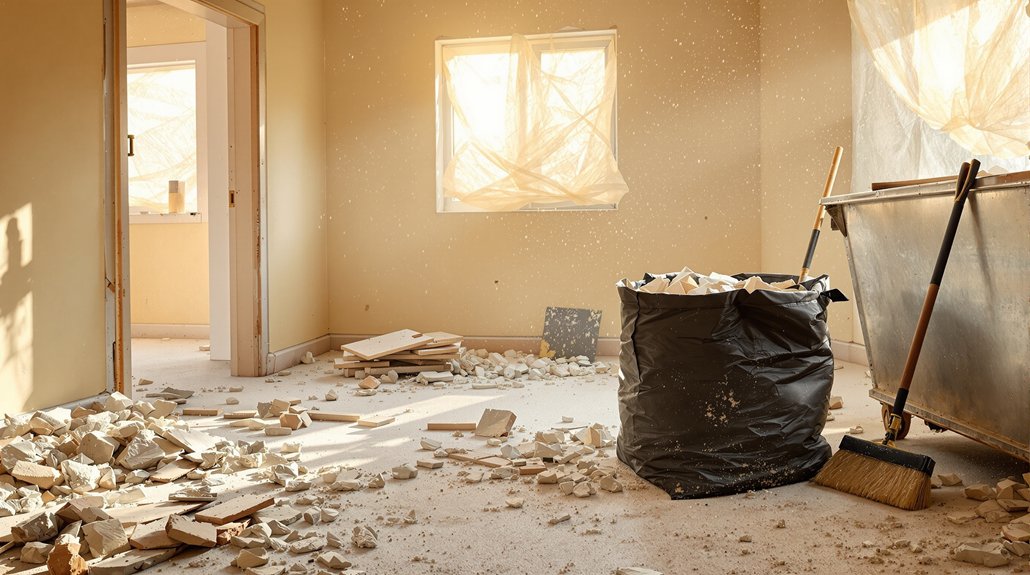
Post-remodel debris cleanup doesn’t have to overwhelm you. Start by sorting materials into recyclables, hazardous waste, and general trash to reduce the number of dump runs. Donate salvageable items to Habitat for Humanity’s ReStore or sell scrap metal for cash. Rent a dumpster for bulk waste and hire certified professionals for hazardous materials. Finish with a thorough HEPA vacuum and deep clean. Keep going to master each step completely.
Key Takeaways
- Sort debris into recyclables, hazardous waste, and general trash upfront to reduce dump runs and lower overall disposal fees.
- Donate salvageable items like cabinets and fixtures to Habitat for Humanity’s ReStore, which offers free pickup service.
- Rent an appropriately sized dumpster and load heavy materials like concrete first to optimize space.
- Hire certified junk removal services for hazardous materials to ensure safe, regulation-compliant disposal and avoid fines.
- Deep-clean after renovation using a HEPA-filter vacuum and damp microfiber cloths, and replace HVAC filters immediately.
Sort Your Remodel Debris Before You Haul Anything Out
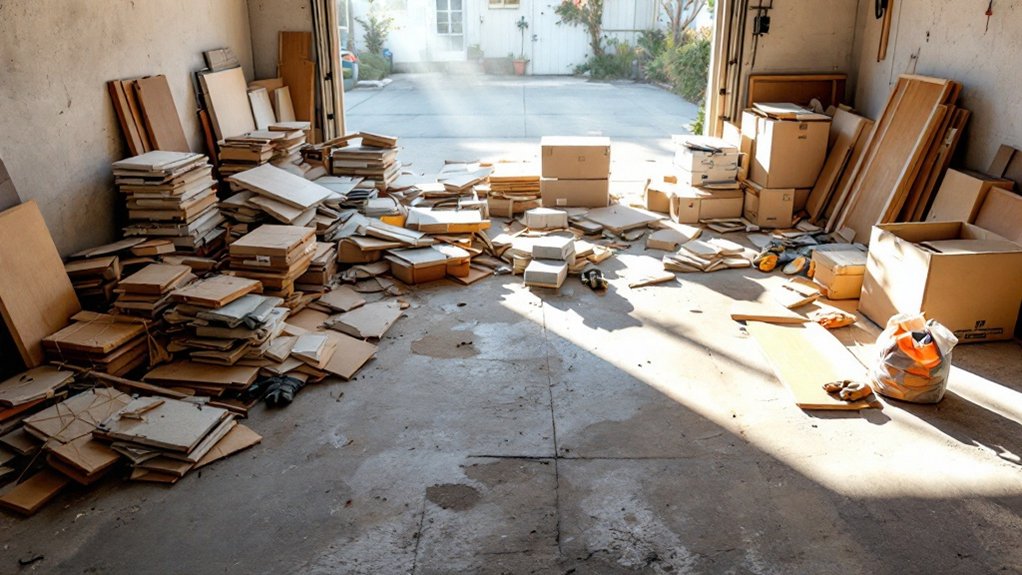
Before you haul a single load to the dump, take time to sort through your debris—it’ll save you money, reduce waste, and make the entire cleanup process more manageable.
Separate materials into categories: recyclables such as metal, wood, and drywall; hazardous waste such as paint and adhesives; and general trash.
Many recycling centers accept clean lumber, concrete, and scrap metal at no charge or even pay you for it.
Donating reusable materials—such as cabinets, fixtures, or tile—to organizations like Habitat for Humanity keeps usable items out of landfills.
Sorting upfront means fewer dump runs, lower disposal fees, and a smarter, cleaner process overall.
Donate or Recycle Salvageable Materials Before They Disappear
Once your debris is sorted, act fast—salvageable materials have a short window before they’re damaged, lost in the chaos, or accidentally hauled away.
Contact Habitat for Humanity’s ReStore for usable cabinets, doors, fixtures, and flooring. Many locations offer free pickup, which saves you hauling time.
For materials they won’t accept, check local recycling centers for metal, concrete, and drywall.
Scrap metal dealers often pay cash for copper pipe or steel framing.
List surplus tile, lumber, or hardware on Facebook Marketplace or Craigslist. Move these items out first—before your dumpster arrives, and everything becomes one undifferentiated pile.
Rent a Dumpster for Large-Scale Remodel Waste
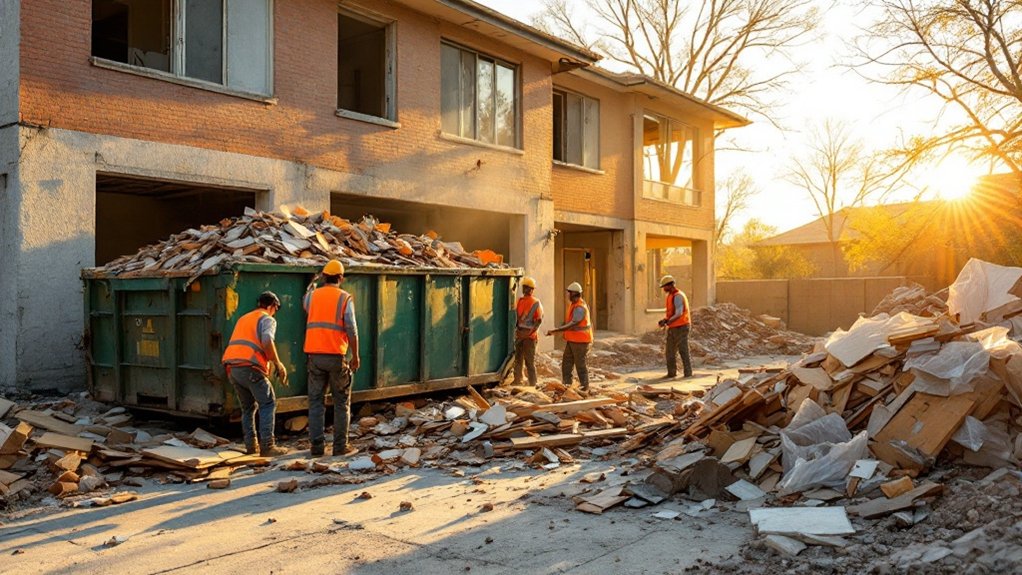
After donating and recycling what you can, a dumpster rental is usually the most practical solution for handling the bulk of remodel debris.
You’ll choose a container size based on your project’s scope—a 10-yard dumpster suits smaller renovations, while a 20- or 30-yard option handles major gut jobs.
Place it on a flat, accessible surface and load heavier materials, such as concrete and drywall, first.
Check your rental agreement for prohibited items, including hazardous materials.
Most companies deliver and retrieve on your schedule, making the entire process straightforward and far less stressful than hauling debris yourself in multiple truckloads.
Hire a Junk Removal Service for Hazardous Remodel Waste
When remodel debris includes hazardous materials such as asbestos, lead-based paint, or old chemical containers, you’ll need more than a standard dumpster rental.
Hiring a certified junk removal service guarantees safe, legal disposal. Here’s why it’s worth it:
- Compliance – Licensed crews follow federal and local hazardous waste regulations, keeping you out of legal trouble.
- Safety – Professionals use proper protective equipment and containment methods to prevent exposure.
- Convenience – They handle everything from identification to disposal, saving you time and stress.
Don’t risk fines or health hazards by cutting corners on dangerous remodel waste.
Deep Clean the Dust and Debris After Your Renovation
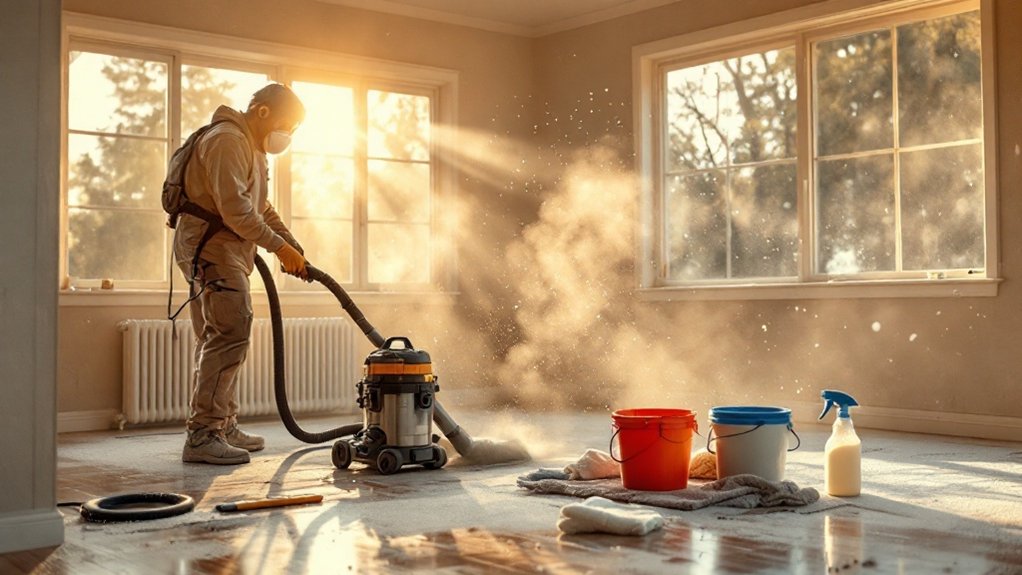
Renovation dust doesn’t disappear on its own—it settles into every crack, vent, and surface in your home.
Start by replacing HVAC filters immediately, since construction dust clogs them fast and circulates debris throughout your space.
Wipe down walls, ceilings, and baseboards before vacuuming floors, so falling dust doesn’t re-contaminate cleaned surfaces.
Use a HEPA-filter vacuum to capture fine particles that a regular vacuum recirculates.
Wipe hard surfaces with damp microfiber cloths for maximum dust pickup.
Don’t forget cabinets, light fixtures, and window sills.
A thorough top-to-bottom deep clean eliminates hidden debris and restores your home’s air quality.
Frequently Asked Questions
How Long Does Post-Remodel Cleanup Typically Take for an Average Home?
You’ll typically spend 1 to 3 days cleaning up after an average home remodel.
For smaller projects like a bathroom refresh, you’re looking at just a few hours.
Larger renovations, such as a full kitchen overhaul, can stretch your cleanup to a full weekend.
Your timeline depends on the volume of debris, dust accumulation, and whether you’re hiring professionals or tackling it yourself.
Planning ahead keeps the process moving efficiently.
Can I Legally Dump Remodel Debris at a Local Landfill Myself?
Yes, you can legally dump remodel debris at a local landfill yourself, but you’ll need to follow specific rules.
Call your local landfill ahead of time to confirm they accept construction waste, as not all facilities do. You’ll likely pay fees based on weight or load size.
Some materials, like asbestos or treated wood, aren’t allowed and require special disposal. Always bring a valid ID and follow the facility’s sorting requirements.
What Permits Might I Need for Debris Removal After Major Renovations?
You’ll likely need a few permits depending on your project’s scope.
Check with your local municipality for a demolition permit if you’ve removed structural elements.
If you’re hauling debris yourself, you might need a transport permit for certain materials, such as asphalt or concrete.
Disposing of hazardous materials, such as asbestos or lead paint, requires special handling permits.
Always contact your local waste management authority to confirm what’s required in your area.
How Much Does Professional Post-Remodel Cleanup Generally Cost Homeowners?
Professional post-remodel cleanup typically costs between $300 and $700 for average-sized projects, but larger renovations can push the cost to $1,500 or more.
You’ll pay based on your home’s square footage, debris volume, and local labor rates. Most companies charge $0.10 to $0.50 per square foot.
If you’re hauling away heavy materials like drywall or concrete, expect additional dump fees.
Getting multiple quotes helps you secure the best deal.
Should I Complete Cleanup Before or After Final Contractor Inspections?
You should complete the cleanup after final contractor inspections, not before.
Let your contractor finish their walkthrough first so they can identify any remaining work, touch-ups, or corrections without disturbing the workspace.
Once you’ve received sign-off, then tackle the deep cleaning and debris removal.
Cleaning too early risks creating new messes during repairs, wasting your time and money.
Wait for that final approval before investing in a thorough post-remodel cleanup.
Conclusion
Post-remodel cleanup doesn’t have to overwhelm you if you tackle it the right way. You’ve got options — sort and donate salvageable materials, rent a dumpster for bulk waste, bring in professionals for hazardous items, and finish with a deep clean. Taking a strategic approach saves you time, money, and stress. Start with a solid plan, and you’ll have your newly renovated space looking spotless before you know it.