

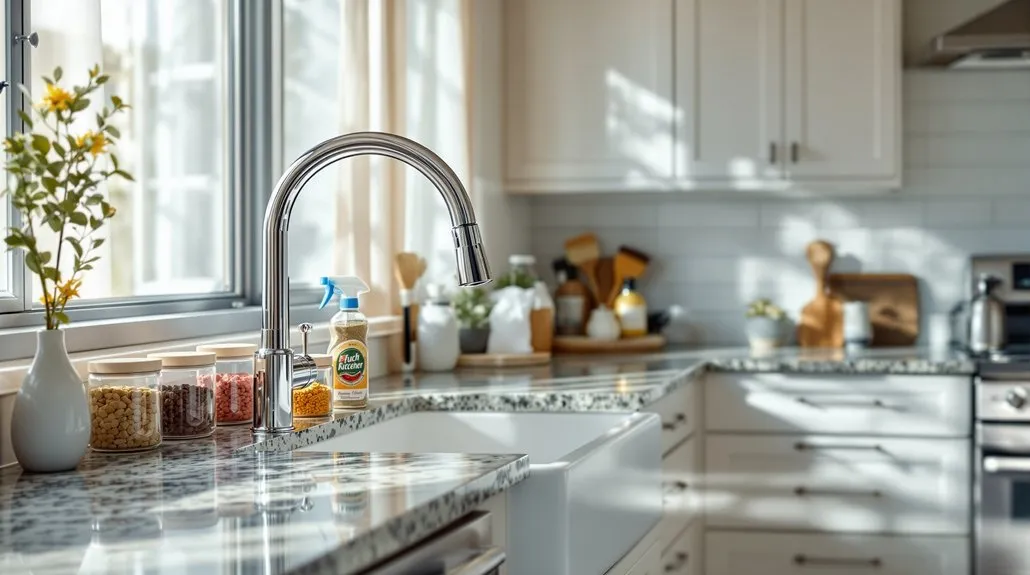
Start by completely clearing your countertops and decluttering cabinets to create designated homes for everything. Deep-clean appliances with natural solutions, such as a baking soda paste for ovens and vinegar for dishwashers. Remove all refrigerator contents, wash the shelves with soapy water, and thoroughly clean the door seals. Sweep floors before mopping, using material-specific cleaners for tile, hardwood, or stone surfaces. These foundational techniques will reveal the remaining secrets to achieving professional-level kitchen cleanliness.
Key Takeaways
- Clear all countertops and declutter cabinets by removing expired items and grouping similar supplies.
- Clean appliances thoroughly with natural solutions, such as a baking-soda paste for ovens and vinegar cycles for dishwashers.
- Deep-clean your refrigerator by removing all contents, washing the shelves, and wiping the seals with a mild bleach solution.
- Use appropriate cleaners for your specific floor type, from wood-specific products to pH-neutral solutions for stone.
- Create designated storage areas for all kitchen items to maintain organization and enable easier future cleaning.
Start With Strategic Decluttering and Organization

Before you can achieve that coveted sparkling kitchen, you’ll need to tackle the clutter that’s hiding your surfaces and making cleaning feel impossible.
Start by clearing countertops completely—every appliance, paper, and random item. Sort through cabinets and drawers, discarding expired items and unused tools.
Group similar items together: baking supplies in one area, cleaning products in another. Create designated homes for everything, ensuring frequently used items stay within easy reach.
Once you’ve established this foundation, you’ll find that maintaining cleanliness becomes effortless, and profound cleaning shifts from an overwhelming chore to a manageable routine.
Master the Art of Appliance Deep Cleaning
Once you’ve conquered the clutter, it’s time to tackle your appliances—the workhorses that endure daily use yet rarely receive proper attention.
Start with your refrigerator: remove all contents and wipe the shelves with warm, soapy water.
For your oven, make a paste of baking soda and water, spread it inside, then spray it with vinegar after letting it sit overnight.
Clean your microwave by heating a bowl of water with lemon slices for two minutes, then wipe away loosened grime.
Don’t forget your dishwasher—run an empty cycle with white vinegar to eliminate buildup and odors.
Transform Your Oven From Grimy to Gleaming
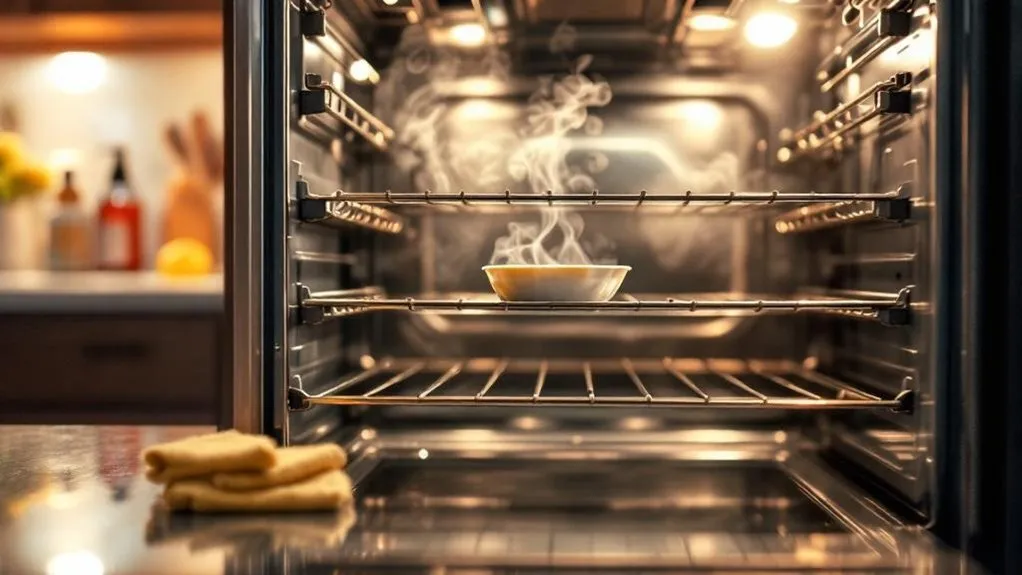
While the previous section touched on basic oven cleaning, let’s dive deeper into transforming your oven from a greasy, burnt-on mess into a spotless appliance you’ll be proud to use.
Remove racks and soak them in hot, soapy water. Create a paste using baking soda and water, then spread it throughout the interior, avoiding heating elements. Let it sit overnight.
Meanwhile, clean the oven door with a razor blade to scrape off stubborn grime. The next day, spray white vinegar over the baking soda paste, then wipe everything clean with damp cloths.
Tackle Stubborn Grease on Range Hoods and Backsplashes
Range hoods and backsplashes collect grease splatters and cooking residue that can seem impossible to remove, but the right approach will cut through even the most stubborn buildup.
Start by removing your range hood’s filters and soaking them in hot, soapy water. For surfaces, create a degreasing solution using dish soap and warm water.
| Surface Type | Best Cleaner | Method |
|---|---|---|
| Stainless Steel | White vinegar + dish soap | Spray, wait 5 minutes, wipe |
| Tile Backsplash | Baking soda paste | Scrub gently, rinse thoroughly |
| Range Hood | Degreaser spray | Apply, let sit, scrub clean |
Work systematically from top to bottom for maximum effectiveness.
Deep Clean Your Refrigerator Inside and Out
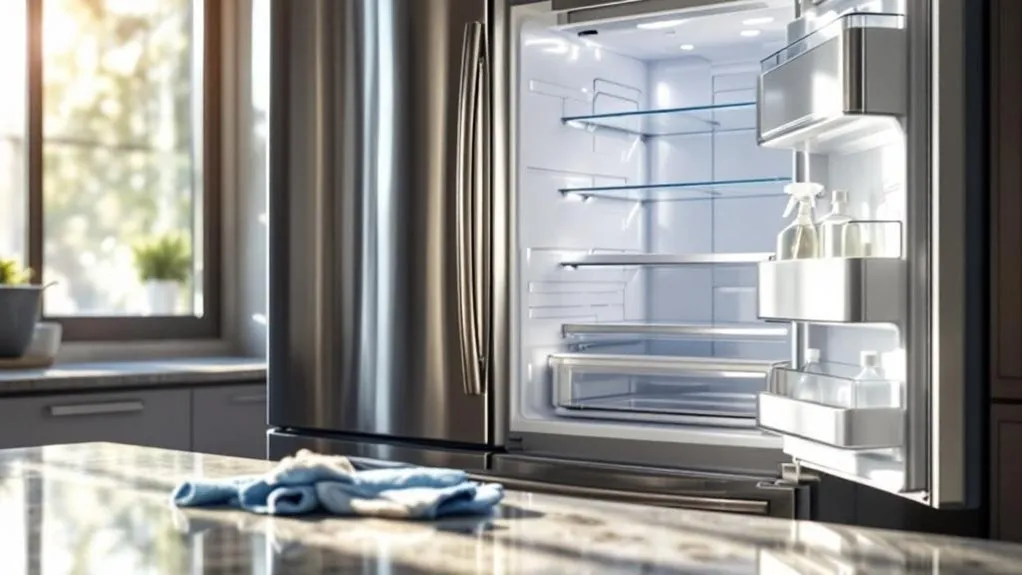
Since your refrigerator works around the clock to keep food fresh, it deserves more than a quick wipe-down—it needs a thorough deep clean that’ll eliminate odors, prevent bacterial growth, and keep your appliance running efficiently.
Start by removing everything and checking expiration dates. Remove the removable shelves and drawers, then wash them in warm, soapy water.
Mix two tablespoons of baking soda with warm water to wipe interior surfaces. Clean door seals with a toothbrush dipped in mild bleach solution.
Don’t forget the exterior, drip tray, and coils underneath for peak performance.
Restore Shine to Stainless Steel Surfaces
Although stainless steel appliances give your kitchen a sleek, professional appearance, they’re notorious for showing every fingerprint, water spot, and smudge.
Start by wiping surfaces with a microfiber cloth dampened with warm water, following the grain direction. For stubborn marks, use white vinegar or a specialized stainless steel cleaner. Apply with gentle circular motions, then buff with a dry cloth.
Avoid abrasive cleaners or steel wool, which can scratch the surface. For extra shine, rub a small amount of olive oil onto the surface using a clean cloth. Work in the direction of the grain for the best results.
Clean and Sanitize Countertops for Every Material Type
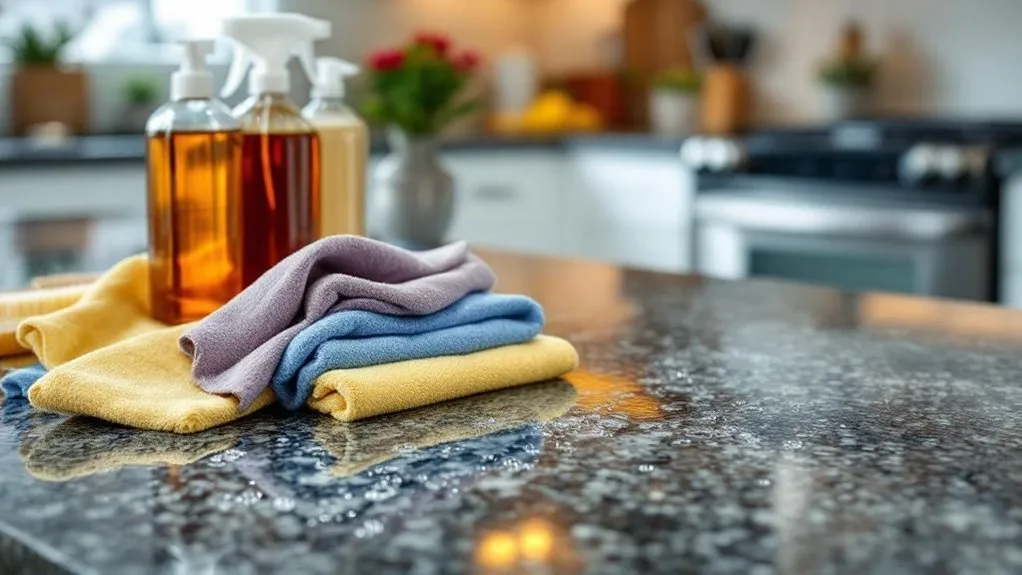
Different countertop materials require specific cleaning approaches to maintain their beauty and prevent damage.
For granite and marble, use pH-neutral cleaners and avoid acidic substances such as lemon juice or vinegar, which can etch the surface.
Quartz countertops are compatible with most cleaners, but avoid abrasive scrubbers.
Laminate surfaces clean easily with mild dish soap and water.
Wood countertops need gentle soap solutions followed by thorough drying.
Concrete requires sealing, maintenance, and neutral cleaners.
Always wipe spills immediately, especially on porous materials.
Sanitize with appropriate disinfectants—rubbing alcohol works well for most surfaces.
Test cleaners in inconspicuous areas first.
Refresh Cabinets and Hardware With Gentle Techniques
While countertops receive daily attention, your kitchen cabinets and hardware often accumulate grease, fingerprints, and grime, which can make your entire kitchen look dull.
Start by dusting cabinet surfaces with a microfiber cloth. Then mix warm water with a few drops of dish soap for gentle cleaning. Wipe cabinet doors in the direction of the wood grain to prevent streaking.
For stubborn grease spots, use a baking soda and water paste.
Clean hardware by removing knobs and handles, soaking them in warm soapy water, then scrubbing with an old toothbrush.
Dry everything thoroughly before reassembling to prevent water damage.
Deep Clean Sinks and Faucets to Remove Buildup
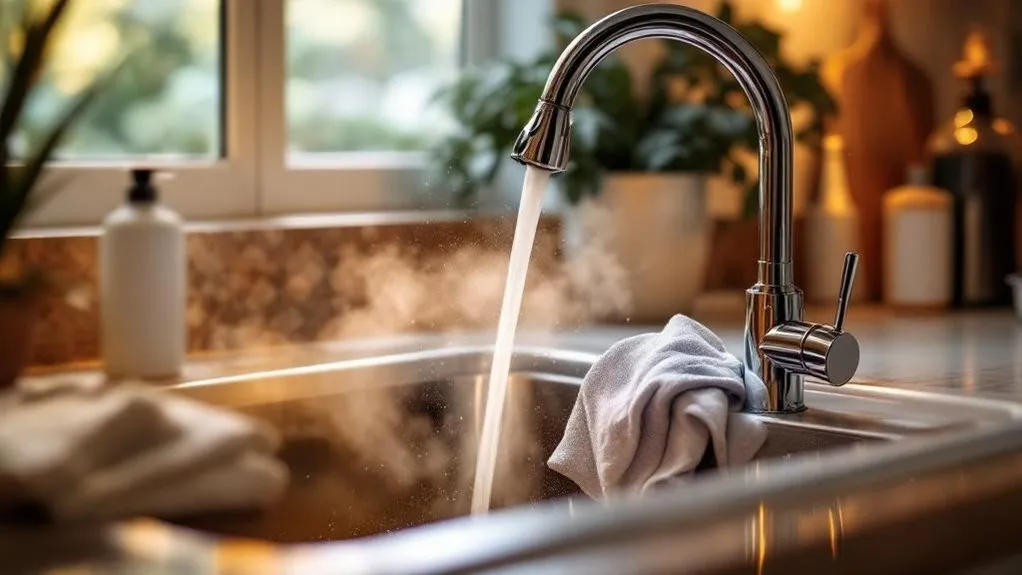
After revitalizing your cabinets, turn your attention to the kitchen’s hardest-working fixture: the sink. Start by removing dishes and debris, then tackle mineral deposits and grime that accumulate daily.
| Surface | Cleaning Solution |
|---|---|
| Stainless Steel Sink | Baking soda paste + white vinegar |
| Porcelain Sink | Dish soap + lemon juice |
| Chrome Faucets | White vinegar on a cloth |
| Brass/Copper Fixtures | Gentle dish soap + soft cloth |
Scrub with a soft brush, paying attention to crevices around the faucet base. For stubborn spots, let cleaning solutions sit for ten minutes before scrubbing. Rinse thoroughly and dry completely to prevent water spots.
Floor Care Strategies for Different Kitchen Surfaces
Once you’ve finished with the sink, shift your focus to the kitchen floor—an area that endures constant foot traffic, spills, and food debris.
Different surfaces require specific approaches. For tile floors, sweep thoroughly, then mop with warm water and mild detergent, paying attention to grout lines.
Hardwood needs gentle cleaning with wood-specific cleaners to prevent damage.
Laminate surfaces are suitable for damp mopping, but avoid excessive water.
Stone floors, such as marble, require pH-neutral cleaners to prevent etching.
Always sweep or vacuum first to remove loose debris, then follow the manufacturer’s guidelines for your specific flooring material.
Frequently Asked Questions
How Often Should I Deep Clean My Kitchen?
You should deep-clean your kitchen every 2-3 months, though high-touch areas need monthly attention.
Don’t wait for the buildup to become overwhelming. Focus on appliances, cabinets, and hidden spots you usually skip during weekly cleaning.
If you cook frequently or have a busy household, you’ll want to deep clean monthly.
Set a seasonal schedule that works for your lifestyle, and you’ll maintain a consistently clean, healthy kitchen environment.
What Cleaning Supplies Are Safe Around Food Preparation Areas?
Use food-safe cleaners, such as white vinegar, baking soda, and mild dish soap, on surfaces where you prepare meals.
These natural options won’t leave harmful residues. You can also use EPA-approved sanitizers for food-contact surfaces.
Always rinse thoroughly with clean water after cleaning, and avoid harsh chemicals such as bleach or ammonia near food-prep areas.
Read labels carefully to guarantee they’re food-safe.
How Do I Prevent Cross-Contamination While Cleaning Different Kitchen Areas?
Use separate cleaning cloths and tools for different areas – designate specific colors for countertops, appliances, and floors.
Clean from cleanest to dirtiest areas, starting with food-prep surfaces, then moving to sinks and trash areas.
Rinse and sanitize your clothes between tasks, or better yet, use disposable paper towels.
Always wash your hands after cleaning each zone and before touching clean surfaces to maintain proper hygiene standards.
What’s the Best Order to Clean Kitchen Areas for Maximum Efficiency?
Start from top to bottom: clean ceiling fans and light fixtures first, then upper cabinets and shelves.
Next, tackle countertops and backsplashes, then appliances such as the microwave, oven, and refrigerator.
Clean the sink and faucet after that.
Finally, sweep and mop floors last so you’re capturing all debris that’s fallen during cleaning.
This prevents you from re-cleaning areas and saves time by working with gravity instead of against it.
How Do I Maintain Cleanliness Between Deep Cleaning Sessions?
You’ll maintain kitchen cleanliness by cleaning as you cook, wiping spills immediately, and doing quick daily tasks.
Load your dishwasher after each meal, wipe down counters and stovetop nightly, and sweep floors daily.
Take out trash regularly and put items back where they belong.
Do a 10-minute kitchen reset each evening—keep surfaces transparent, wash dishes, and spot-clean any messes.
These habits prevent buildup between deep cleans.